Teachers Day: Have We Turned Respect into Just Another School Event?

Teachers Day. Just two words.
But what do these two words really mean to us today?
Is it a day to thank the teacher who changed our life?
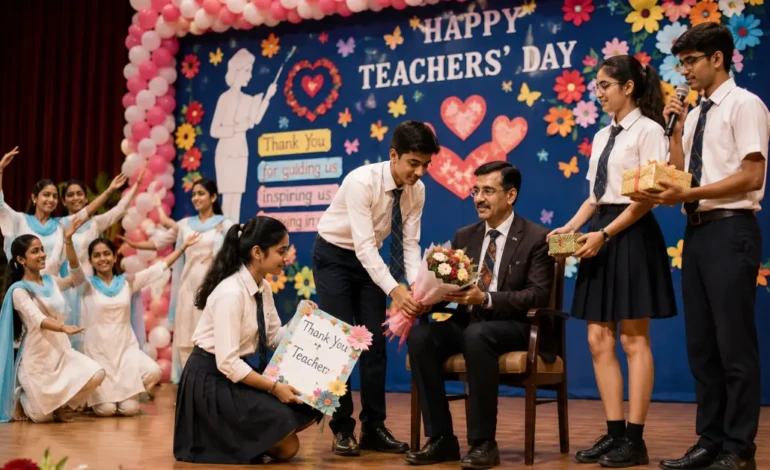
Or has it slowly become another school event—with stage performances, dances, gifts, cakes, photographs and beautifully dressed students?
Somewhere between celebration and tradition, have we forgotten the most important word connected with Teachers Day—respect?
Why Do We Celebrate Teachers Day?
In India, Teachers Day is celebrated on September 5, the birth anniversary of Dr. Sarvepalli Radhakrishnan, the philosopher, statesman and former President of India. The day has become an occasion to recognise the contribution of teachers and their role in shaping students and society.
But if we stop for a moment and think about it, the question is much bigger than a date on the calendar.
Why do we need a Teachers Day at all?
Because teaching is not simply a profession where one person gives information and another person receives it.
A teacher influences the way a child thinks.
A teacher notices when a child is struggling.
A teacher sometimes sees potential in a student before the student sees it in himself or herself.
And many times, a teacher says one small sentence that a child remembers for years.
So let me ask you something:
If a teacher can influence a child’s confidence, thinking, discipline and direction for years, shouldn’t the respect given to that teacher go beyond one day?
There Was a Time When Teachers Meant Something Different
Think about the relationship between students, parents and teachers a few decades ago.
It was different.
A teacher entered the classroom and students stood up.
Students listened carefully—not because they were afraid, but because the teacher’s words carried value.
Parents often told their children:
“Teacher ne jo kaha hai, dhyan se sunna.”
If a teacher complained about a student’s behaviour, the first reaction at home was often not:
“What did the teacher do wrong?”
It was more likely:
“What did you do?”
I am not saying that teachers were always right in the past.
They were human then, just as they are human today.
But there was a certain social understanding that a teacher deserved basic respect.
And that understanding mattered.
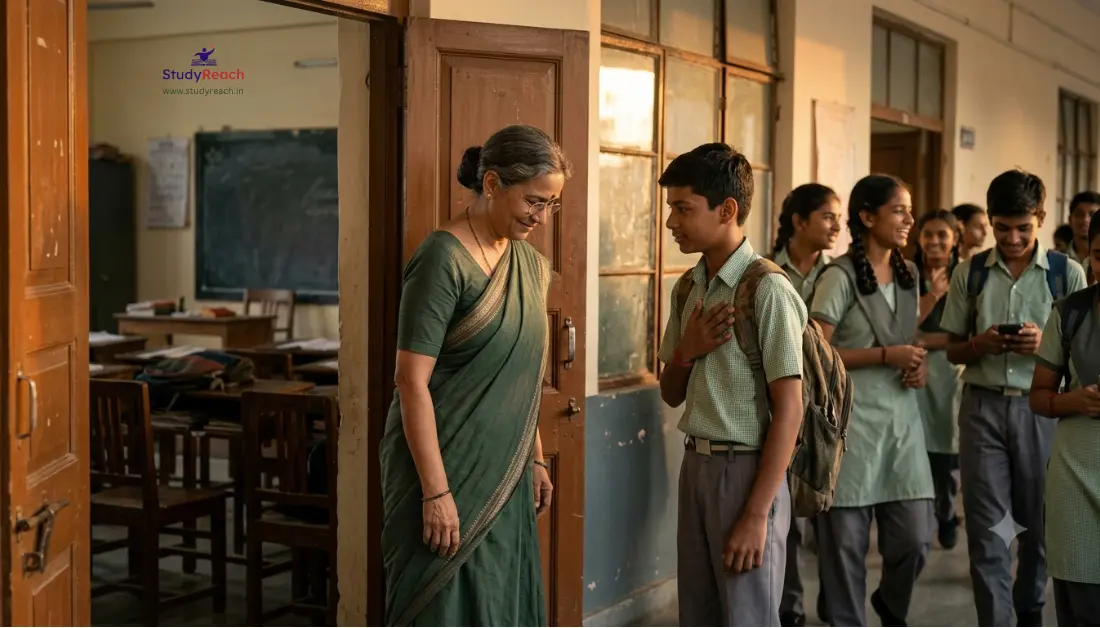
Suggested image: A teacher interacting meaningfully with students, showing genuine respect and human connection.
And Then Something Changed
Today, Teachers Day is certainly celebrated with enthusiasm.
Schools organise special assemblies.
Students perform dances.
Teachers are invited on stage.
There are cakes, gifts, cards, photographs and social media posts.
Teachers dress differently.
Students dress differently.
Everyone enjoys the day.
And there is absolutely nothing wrong with celebrating.
In fact, teachers deserve celebration.
But I want to ask a slightly uncomfortable question.
Have we made Teachers Day bigger while making teacher respect smaller?
When Teachers Day Becomes Just an Event
Imagine a school where Teachers Day is celebrated beautifully.
The stage looks wonderful.
Students perform.
Teachers receive gifts.
Everyone takes photographs.
The school posts pictures online.
And by the next morning, everything returns to normal.
A student again ignores the teacher’s instructions.
A parent again speaks about a teacher negatively in front of the child.
A teacher’s advice is again dismissed.
And the respect that was celebrated yesterday disappears today.
Is that really what Teachers Day should be?
Perhaps we need to look beyond the event.
The Real Problem Is Not the Students Alone
It is easy to blame today’s children.
We say:
- Students don’t respect teachers.
- Students don’t listen.
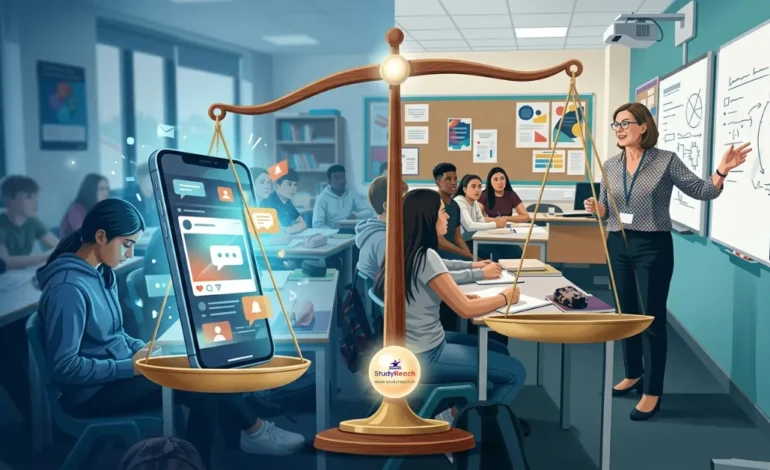
- Students are too dependent on phones.
- Students think they know everything.
But are students entirely responsible?
Where did they learn their attitude towards teachers?
A child does not automatically understand the importance of a teacher.
We teach it.
Parents teach it.
Schools teach it.
Society teaches it.
The way adults speak about teachers teaches it.
And this is where I believe we need to have an honest conversation about the role of parents.
Parents: Please Be Careful What Your Child Hears
During my years in education, I have seen something that worries me.
Sometimes a parent has a genuine concern about a teacher.
That is completely understandable.
Teachers can make mistakes.
Schools can make mistakes.
A parent has every right to question, complain and seek clarification.
But where we raise the concern matters.
If there is a problem with a teacher, please come to the school.
Discuss it.
Ask questions.
Give suggestions.
Seek improvement.
But should we discuss the teacher’s character negatively in front of the child?
Should we say:
“Teacher ko kuch nahi aata.”
“Teacher hamesha galat hota hai.”
And then expect the same child to stand respectfully in front of that teacher the next morning?
How is that supposed to work?
You Can Question a Teacher Without Destroying Respect
This distinction is extremely important.
Respect does not mean blind acceptance.
If a teacher is wrong, a parent should be able to say so.
If a school needs improvement, parents should say so.
If a student has been treated unfairly, the matter should absolutely be discussed.
But there is a difference between raising a concern and destroying the teacher’s credibility in the child’s mind.
Why not tell the child:
“Your teacher may have made a mistake. We will discuss it with the school. But you must continue to respect your teacher.”
Isn’t that a healthier lesson?
What Happens When Students Stop Respecting Teachers?
This is not simply a matter of manners.
It affects learning.
Think about a classroom where a teacher has lost the student’s respect.
Will the student listen carefully?
Will the student accept correction?
Will the student feel comfortable asking questions?
Will the teacher be able to mentor the child effectively?
A teacher-student relationship does not need fear.
But it does need trust, boundaries and mutual respect.
The Teacher’s Role Has Changed Too
Of course, this conversation cannot be one-sided.
Teachers also have responsibilities.
The teacher of today cannot simply say:
“I am the teacher, so you must listen.”
Today’s students ask questions.
They have access to information.
They use technology.
They can compare ideas instantly.
They expect explanation rather than authority alone.
So teachers must also keep learning.
They need better communication.
They need empathy.
They need to understand technology.
They need to understand today’s children.
And yes, they need to earn respect through professional competence and character.
Respect cannot be demanded forever simply because someone has been given the title “teacher”. It must also be sustained through the way we teach, guide, listen and behave.
So, What Should Teachers Day Actually Celebrate?
Perhaps the answer is much simpler than we think.
Teachers Day should celebrate the relationship between teaching and transformation.
The teacher who helped a weak student gain confidence.
The teacher who encouraged a child who wanted to give up.
The teacher who stayed back to explain something one more time.
The teacher who corrected a student—not to insult the child, but to make the child better.
The teacher who recognised talent.
The teacher who noticed that something was wrong even when the child said nothing.
These moments rarely appear in photographs.
But these are the moments that make teachers valuable.
Can One Day Bring Back Respect?
Probably not.
A celebration cannot create respect that does not exist during the other 364 days.
A greeting card cannot replace good behaviour.
A gift cannot replace gratitude.
A stage performance cannot replace listening.
And a social media post cannot replace the simple words:
“Thank you, Sir.”
“Thank you, Ma’am.”
Maybe We Need to Change the Way We Celebrate Teachers Day
What if, instead of only organising a large function, every student did something much simpler?
| Instead of only… | Why not also… |
|---|---|
| Giving a gift | Write what the teacher actually taught you |
| Taking photographs | Spend five minutes talking to your teacher |
| Performing on stage | Show respect in the classroom every day |
| Posting “Happy Teachers Day” | Say “Thank you” personally |
| Celebrating for one day | Respect teachers throughout the year |
And What About Society?
Perhaps we also need to look at the larger picture.
What message does society send about teaching?
Do we genuinely value teachers?
Do we encourage talented young people to enter teaching?
Do we speak about teachers with the dignity that the profession deserves?
UNESCO continues to emphasise the importance of teachers being recognised, supported and valued, and World Teachers Day exists not only to celebrate educators but also to reflect on the future and status of the teaching profession.
So perhaps Teachers Day should not only ask students to respect teachers.
It should also make society ask whether we are giving teachers the respect, professional trust and support they need.
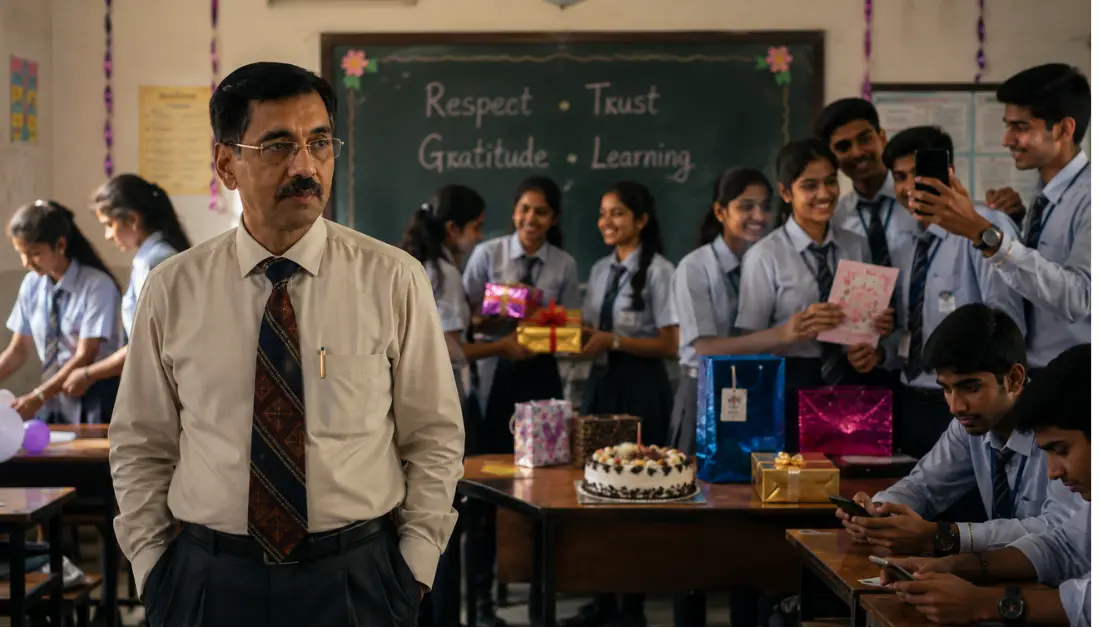
Suggested image:A teacher walking through a classroom while students are engaged in Celebrating.
Teachers Day in the Age of AI
There is another reason this conversation matters today.
Artificial Intelligence can provide information in seconds.
Students can ask a chatbot to explain a concept.
They can generate an essay.
They can get ideas for a project.
They can find information without opening a textbook.
So what remains special about a teacher?
A lot.
A teacher understands the child behind the answer.
A teacher notices hesitation.
A teacher knows when a student needs encouragement rather than another explanation.
A teacher can challenge a student.
A teacher can build confidence.
A teacher can model values.
Technology can provide information.
Teachers help children understand what to do with that information.
That makes teacher respect even more important—not less.
You can also read my earlier StudyReach article: AI Will Not Replace Teachers — But Teachers Who Use AI May Change the Future of Education .
Parents and Teachers Must Be on the Same Side
Perhaps this is the most important message I want to leave with parents.
You and the teacher may not always agree.
That is normal.
You may have concerns.
The teacher may have a different perspective.
Talk about it.
Question it.
Find a solution.
But please remember one thing:
Never make your disagreement with a teacher bigger in your child’s mind than the teacher’s importance in your child’s education.
My Question to Students
If you are a student reading this, I want to ask you something.
Think about the teachers you have met.
Is there one teacher who helped you when you were struggling?
One teacher who believed in you?
One teacher who corrected you?
One teacher whose words you still remember?
What did that teacher give you?
Maybe knowledge.
Maybe confidence.
Maybe discipline.
Maybe direction.
Maybe simply the belief that you could do better.
Now ask yourself:
Have I given that teacher the respect they deserve?
My Question to Parents
And parents, I have an equally important question for you.
When your child comes home and says,
“Teacher ne mujhe daanta.”
What is your first response?
Do you immediately take your child’s side?
Or do you first ask:
“Why did the teacher say that?”
That one question can make a huge difference.
You can still support your child.
You can still investigate.
You can still complain if necessary.
But you are also teaching your child something valuable:
Respect and questioning can exist together.
Maybe the Real Teachers Day Is Not September 5
What if the real Teachers Day is not the day we celebrate?
What if the real Teachers Day is every day when:
- A student listens when the teacher speaks.
- A parent discusses concerns respectfully.
- A teacher admits a mistake.
- A school supports its teachers.
- A student says thank you without being told.
- A society recognises the value of education.
Perhaps that is the Teachers Day we should really be working towards.
One More Question Before You Leave
If Teachers Day disappeared tomorrow, would our children still respect their teachers?
If the answer is yes, perhaps we are doing something right.
If the answer is no, perhaps the problem is not Teachers Day.
Perhaps the problem is what we have taught our children to value.
Final Thoughts
I love seeing schools celebrate Teachers Day.
I love seeing teachers smile.
I love watching students perform for their teachers.
There is nothing wrong with celebration.
But I would like us to go one step further.
Let the dance happen.
Let the cake be cut.
Let the photographs be taken.
Let the teachers enjoy their special day.
But after the celebration is over, let the respect remain.
Because a teacher does not enter a child’s life for one day.
A teacher may influence that child’s life for decades.
And perhaps that is why Teachers Day should never be only about celebrating teachers.
It should remind us why teachers matter.
Celebrate the teacher for a day.
Respect the teacher every day.
You May Also Like
Gen Z: Protest, Politics or Progress?
The Future of Education: 10 Skills Every Student Will Need in an AI-Powered World
AI Will Not Replace Teachers — But Teachers Who Use AI May Change the Future of Education
7Es Framework: A Practical Teaching Model for Teachers and Parents

Shailendra Porwal
Founder & Editor, StudyReach.in
An experienced school educator and education professional, Shailendra Porwal writes about teachers, students, parents, school leadership, careers and the changing world of education. Through StudyReach, he shares practical observations from years of working closely with schools, teachers, students and parents.