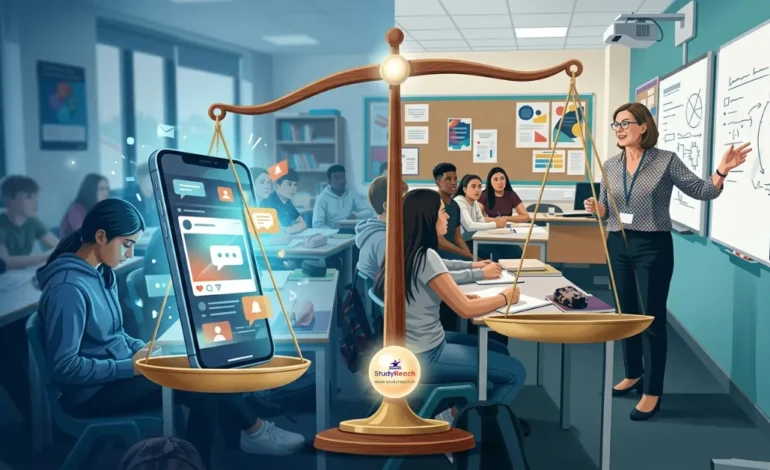
Smartphone Ban in Schools

Should Schools Ban Smartphones? The Great Debate Over Screen Time and Student Learning
A smartphone can distract a child from a lesson in one moment and help that same child find information, translate a word or access a learning resource in another.
So perhaps the real question is not whether schools should ban smartphones completely. Perhaps we should ask a better question: When does a smartphone help learning, and when does it get in the way?
As a school educator, this is a question I hear more often than before. Parents are worried about screen time. Teachers are frustrated by distractions. Students, understandably, do not always want to give up a device that has become part of everyday life.
And schools are caught in the middle.
The debate has now moved far beyond individual schools. Around the world, governments and education systems are introducing restrictions on mobile phones in schools. UNESCO reported in March 2026 that 114 education systems — 58% of countries worldwide — had national restrictions on mobile phones in schools.
But here is the interesting part: banning a phone does not automatically teach a child how to use technology responsibly.
That is where the real debate begins.
📌 My View in One Sentence
Schools should strongly restrict recreational smartphone use, but the goal should not be simply to take phones away — it should be to create focused classrooms while teaching students responsible digital habits.
Why Has the Smartphone Ban Debate Become So Big?
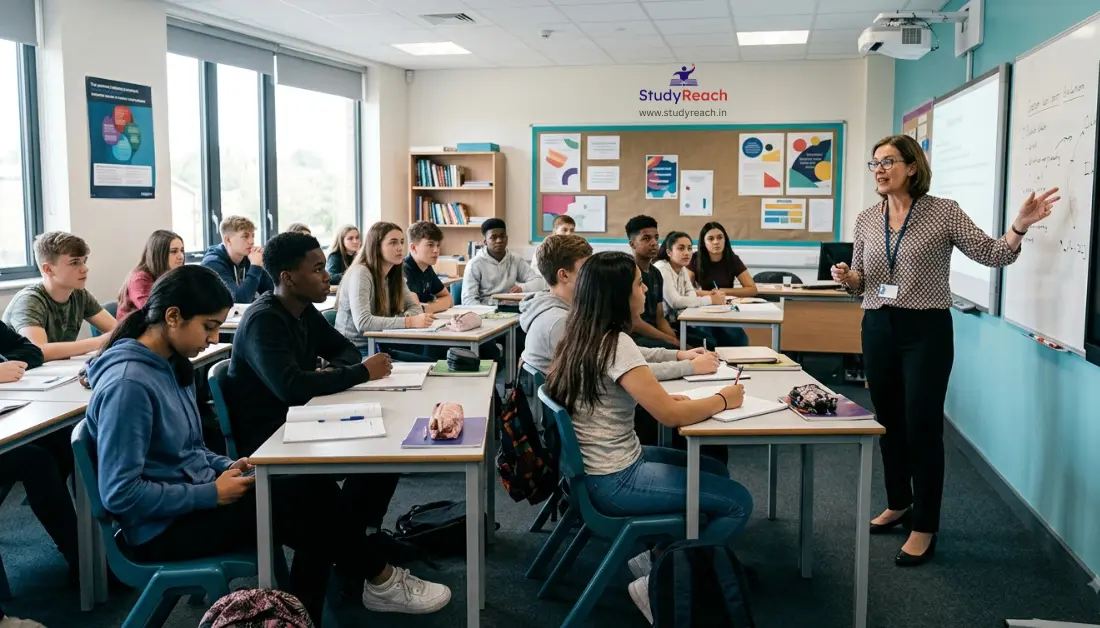
Think about a typical classroom.
A teacher is explaining an important concept. Most students are listening. One student receives a notification. Another checks a message. Someone opens a social-media app “just for a second”. A few minutes later, the lesson has moved on, but attention has already moved somewhere else.
The problem is not always the phone itself.
The problem is what the phone makes possible.
Messages, games, videos, social media, shopping, notifications and entertainment are competing with the teacher for the student’s attention.
That competition is difficult for adults. It is even harder for children and teenagers who are still developing self-control and attention habits.
The OECD reported that nearly one in three students in its 2024 analysis experienced distraction from digital devices in class, while its research also highlights the importance of teaching students how to manage digital environments rather than relying only on restrictions.
What Is a Smartphone Ban in Schools?
A smartphone ban in schools does not necessarily mean that students can never bring a phone onto school property.
Schools can create very different types of policies.
| Type of Policy | What It Means |
|---|---|
| Classroom restriction | Phones are not used during lessons unless the teacher specifically permits them. |
| Phone-free school day | Students keep phones switched off or stored away throughout the school day. |
| Phone storage system | Students place phones in lockers, pouches or another secure location. |
| Educational-use policy | Phones can be used when they clearly support a learning activity. |
| Full prohibition | Students are not permitted to carry personal smartphones on school premises. |
That distinction matters.
When someone says, “We need a smartphone ban in schools,” the first question should be: What exactly are we banning?
What Is Happening in the United States?
The United States has become one of the most visible parts of this debate.
According to the U.S. National Center for Education Statistics, 77% of public schools reported prohibiting students from using cell phones during class in 2024. The same survey found that 38% of schools with phone policies also restricted use outside class, such as between classes or during free periods.
That tells us something important.
The conversation is no longer about whether smartphones are present in schools. They already are.
The conversation is about how schools should manage them.
Different states, districts and schools have taken different approaches. Some require phones to remain switched off. Some use locking pouches. Some allow phones during breaks. Others have moved toward stricter all-day restrictions.
This variety is actually useful because it reminds us that there may not be one perfect policy for every school.
What Does the Research Say About Smartphones and Learning?
This is where we need to be careful.
It would be easy to write, “Smartphones are bad for students. Ban them and marks will improve.”
But research is more complicated than that.
A 2025 systematic review covering 34 studies found that off-task smartphone and social-media use was negatively associated with academic achievement in most of the studies reviewed.
At the same time, the OECD has stressed that the evidence around school phone restrictions is not completely straightforward. Some studies show improvements in concentration or academic outcomes, while others find limited or mixed effects. Enforcement and the way a policy is implemented appear to matter greatly.
There is a big difference between smartphone use for learning and recreational smartphone use during learning time.
A good school policy should recognise that difference.
5 Reasons Schools Should Restrict Smartphones
1. Smartphones Can Break Attention
Learning requires attention.
A student cannot fully understand a difficult concept while constantly switching between a lesson and notifications.
Even when the student is not actively using the phone, the possibility of receiving a message or checking something can become a distraction.
This is one of the strongest arguments for a smartphone ban in schools.
2. Students Need Real Conversation
Schools are not only places where students learn mathematics, science, languages or history.
They are also places where children learn how to communicate.
They disagree. They cooperate. They negotiate. They make friends. They solve small conflicts. They learn to listen.
If every free moment is spent looking at a screen, some of those ordinary human interactions can disappear.
3. Phones Can Make Classroom Management Harder
Teachers already have enough to manage.
If a teacher has to repeatedly ask students to put their phones away, valuable teaching time is lost.
A clear school-wide policy can remove some of that daily argument.
4. Social Media Can Follow Students Into the Classroom
A student may be physically sitting in a classroom but mentally be somewhere else.
A social-media argument, a new message or a viral video can become more important than what is happening in the lesson.
Schools cannot control everything students do outside school. But they can create a protected period during the day where students are encouraged to focus on learning and real relationships.
5. A Phone-Free Period Can Help Students Reset
Children do not necessarily need more technology every minute of the day.
Sometimes they need a break from it.
A school day without constant notifications can give students a chance to read, talk, think, play, participate and simply be present.
But Should Schools Completely Ban Smartphones?
Now we come to the other side of the debate.
I would be cautious about a complete ban.
Why?
Because smartphones are also useful tools.
Students may use them for translation, accessibility, research, educational applications, photographs of classroom work, emergency communication and other legitimate purposes.
Some students may also have specific needs that require access to a device.
So a blanket policy that treats every phone use as equally harmful may be too simplistic.
📵 The Case for Restriction
- Less distraction
- Better classroom attention
- Fewer interruptions
- More face-to-face interaction
- Easier classroom management
📱 The Case for Responsible Use
- Useful learning resources
- Accessibility support
- Research and information
- Digital literacy
- Emergency communication
The Bigger Issue Is Not the Phone — It Is Digital Self-Control
This may be the most important point in the entire discussion.
If a school takes away every student’s phone for six hours, students may concentrate better during those six hours.
But what happens when they go home?
If they immediately spend six more hours scrolling, gaming or checking social media, has the school really solved the problem?
Not completely.
Schools have a responsibility to teach students how to manage technology, not just how to live without it.
UNESCO has made a similar point: restrictions may reduce distraction, but schools also have an important role in developing digital literacy, critical thinking and responsible technology use.
Screen Time Is a Bigger Question Than Smartphone Use
Sometimes we blame the smartphone when the real issue is excessive screen time.
A child may spend very little time using a phone at school but several hours using a tablet, gaming console, television or computer at home.
That is why parents and schools should look at the complete digital picture.
The OECD’s recent work on children’s digital lives highlights the trade-offs between digital leisure and learning. Excessive digital leisure can be associated with lower engagement in homework and school learning, while the evidence supports helping students and families develop healthier digital habits rather than relying only on outright bans.
In other words, screen time management is not only a school problem.
It is a family, school and society problem.
What Should Schools Do Instead of a Simple Ban?
In my view, the most practical approach is a structured smartphone policy.
It should be strict enough to protect learning but sensible enough to recognise legitimate needs.
A Practical School Smartphone Policy
- No recreational phone use during lessons.
- Phones remain switched off or stored away during teaching time.
- Teachers may permit phones for clearly defined learning activities.
- Students with documented medical, accessibility or other legitimate needs receive appropriate exceptions.
- Parents receive clear information about the policy.
- Emergency communication procedures are clearly explained.
- Consequences for violations are predictable and proportionate.
- The policy is reviewed periodically rather than treated as permanent.
What Can Parents Do at Home?
A school cannot teach healthy digital habits if the home environment sends the opposite message.
Parents do not need to become “phone police”. In fact, constant checking can sometimes create more conflict.
Instead, families can establish simple routines.
- No phones during family meals.
- No phones during homework unless genuinely needed.
- Keep phones away during bedtime.
- Turn off unnecessary notifications.
- Encourage reading, outdoor activity and face-to-face conversation.
- Parents should model the same behaviour they expect from their children.
That last point may be the hardest.
If a parent tells a child, “Put your phone away,” while checking their own phone every few minutes, the message is unlikely to be very convincing.
Children learn digital habits partly by watching adults.
What Should Teachers Do?
Teachers should not have to spend every lesson fighting with phones.
A clear routine can make a huge difference.
For example:
Before the Lesson
Students place phones in the designated storage area or switch them off.
During the Lesson
The teacher focuses on teaching rather than repeatedly policing devices.
When Technology Helps
The teacher clearly announces when phones may be used for a learning activity.
At the End
Students retrieve devices according to the school’s established routine.
The key is consistency.
If one teacher allows unrestricted phone use and another confiscates phones for the same behaviour, students quickly learn that the rules depend on the adult in front of them.
A school-wide policy is therefore more effective than individual teacher rules.
Should Smartphones Be Used for Educational Purposes?
Yes — when there is a genuine educational reason.
Imagine a science teacher asking students to photograph a plant and identify its features. Or a language teacher asking students to record a short speaking activity. Or a geography teacher asking students to use a mapping application.
In such cases, the smartphone can be a useful educational tool.
The important question is:
That is a question teachers can ask themselves before allowing devices in class.
What About Student Privacy and Safety?
There is another issue that should not be forgotten.
Smartphones are cameras, recording devices, communication tools and gateways to the internet.
Schools therefore need clear rules about photography, video recording, cyberbullying, sharing personal information and inappropriate online behaviour.
A smartphone policy should not only say “Do not use your phone.”
It should also explain “How should you use digital technology responsibly?”
For schools developing such policies, digital safety should be considered alongside academic concerns. CBSE also maintains school safety and cyber-safety guidance for affiliated schools.
What Can India Learn From the Global Debate?
India does not need to copy another country’s smartphone policy blindly.
Our schools are different. Our class sizes, transport systems, parent expectations, school infrastructure and access to technology are different.
However, the global debate offers an important lesson.
Schools should not wait until smartphone-related problems become unmanageable.
They should establish clear expectations early.
For CBSE schools in particular, the issue also sits within a larger conversation about digital learning, responsible technology use and student safety.
StudyReach has previously discussed the changing role of technology in student learning. You may also find our guide on AI tools for students in 2026 useful when thinking about the difference between productive technology use and technology dependence.
And if you are interested in how technology can be used to strengthen teaching rather than distract from it, our article on the 7Es Framework Teaching Model offers a useful teaching perspective.
A Better Question for School Leaders
Instead of asking:
“Should we ban smartphones?”
I would encourage school leaders to ask five questions:
- Are smartphones affecting classroom attention in our school?
- Do our teachers have a clear and consistent policy?
- Can students explain when phone use is appropriate?
- Do parents understand and support the school’s expectations?
- Are we teaching digital responsibility alongside imposing restrictions?
If the answer to these questions is clear, the school is already much closer to the right solution.
So, Should Schools Ban Smartphones?
After looking at both sides, my answer would be:
📵 Restrict Them — But Do Not Stop at the Ban
Schools should strongly restrict recreational smartphone use during learning time. For many schools, a phone-free classroom or school day may be the most practical approach.
But a restriction should be combined with digital literacy, clear exceptions, consistent enforcement and teaching students how to manage technology responsibly.
A complete ban may be appropriate for some age groups or school environments. A controlled-use model may work better in others.
There is no universal answer.
What matters is whether the policy protects the child’s ability to learn, interact, concentrate and grow.
The Real Goal Is Not a Phone-Free Child
This is where I think the debate often goes wrong.
We do not want children to grow up believing that every digital device is harmful.
They will live, study and work in a world where technology is everywhere.
They will need to know how to use it.
They will also need to know when to put it down.
That second skill may become just as important as the first.
Final Thoughts
The smartphone is not the enemy.
But neither is it harmless.
Like many powerful tools, its value depends on how it is used.
A smartphone can help a student learn a new word, research a topic or access an educational resource. The same phone can also steal attention from a lesson in seconds.
That is why I do not believe the education debate should be reduced to “ban phones” versus “allow phones.”
The better debate is about purpose, timing, responsibility and balance.
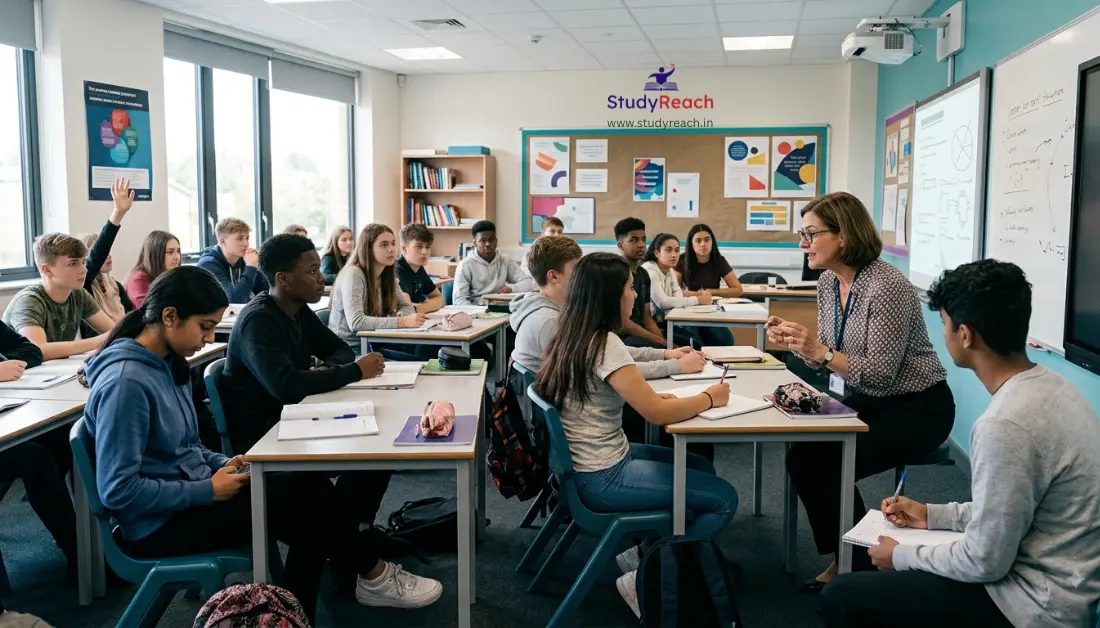
Schools should protect the classroom.
Parents should protect healthy routines at home.
Teachers should model responsible technology use.
And students should gradually learn the most important skill of all:
What Do You Think?
Should schools introduce a complete smartphone ban, restrict phones during lessons, or teach students to use them responsibly?
Share your opinion with StudyReach.
Frequently Asked Questions
Should schools ban smartphones?
Schools should strongly restrict recreational smartphone use during lessons. Whether they should introduce a complete school-day ban depends on the age of students, school environment, safety requirements and the school’s ability to enforce the policy consistently.
Do smartphones affect student learning?
Research generally finds that off-task smartphone and social-media use is associated with poorer academic outcomes, although the strength of the relationship varies. The effect depends on how, when and why students use their devices.
Can smartphones be useful for education?
Yes. Smartphones can support research, translation, accessibility, educational applications and classroom activities. The key is to ensure that the device supports the learning objective rather than distracting from it.
What is the best school smartphone policy?
A practical policy should restrict recreational use during learning time, provide clear rules and exceptions, establish consistent consequences, involve parents and students, and teach responsible digital behaviour.
Does banning smartphones improve academic performance?
Some research suggests that restricting smartphones can improve concentration and, in some contexts, academic outcomes. However, evidence is mixed and enforcement matters. A ban alone does not guarantee better learning.
Sources & Further Reading
- UNESCO Global Education Monitoring Report — Phone bans in schools and the global policy debate.
- OECD — Managing Screen Time: How to Protect and Equip Students Against Distraction.
- OECD — Students, Digital Devices and Success.
- OECD — Growing Up in the Social Media Age.
- U.S. National Center for Education Statistics — Cell phone policies in U.S. public schools.
- Systematic review of off-task smartphone and social-media use and academic achievement.

About the Author
Shailendra Porwal is an experienced school educator, Principal and education professional with extensive experience in school leadership, teaching-learning practices, academic planning and educational administration.
As the Founder and Author of StudyReach.in, he shares practical and easy-to-understand insights for students, parents, teachers and education leaders.
His approach: making education simpler, more practical and relevant to the changing needs of learners, parents and schools.