NEP 2020 School Leadership: Ground Realities from Indian Classrooms

Table of Contents
Six years have quietly slipped past. Big policy documents arrived with fanfare.
Classrooms across our country shifted gears. Are we truly winning on the ground?
As an educator and mentor walking school corridors every single day, I see the honest answers up close. True transformation needs more than ministerial circulars and printed guidelines. It demands frontline dedication from every teacher and administrator.
Let us examine how NEP 2020 School Leadership is actively shaping our schools today. The Ministry of Education, Government of India (MoE) set ambitious structural targets. Yet, bridging high-level policy with daily chalkboard reality remains our greatest test.
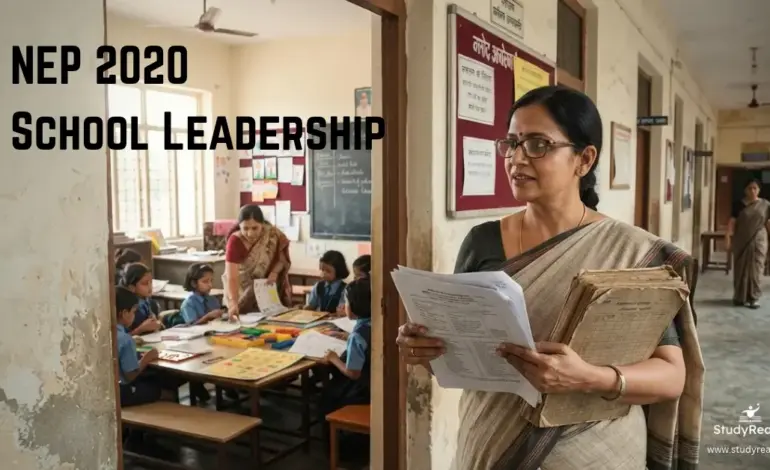
When we talk about NEP 2020 School Leadership, we are talking about transforming mindsets. Principals are no longer just administrative managers tracking attendance registers. They must now act as instructional guides, pedagogical mentors, and community connectors.
The Core Pillar: Effective NEP 2020 School Leadership
Our educators face immense paperwork alongside joyful teaching moments. Balancing compliance with creativity requires exceptional administrative grit.
Let us look at what changing leadership roles truly mean for our campuses. Many principals ask: “Sir, how do we balance board exam pressures with joyful experiential learning?”
My answer is simple: systemic alignment takes patient, persistent effort. We must empower teachers to make independent pedagogical choices inside closed classroom doors.
“Principal ji, syllabus finish karna hai ya baccho ko concept sikhana hai? Both are equally important, but prioritization is key!”
This common staffroom conversation highlights our daily operational tightrope walk. Effective NEP 2020 School Leadership successfully resolves this exact tension through smart scheduling.
Let us review foundational curriculum changes that support modern competency-based skill building. As students navigate rapid technological changes, guiding them effectively matters immensely. You can explore more on preparing young minds through 10 Skills Every Student Will Need in an AI-World to align your teaching strategies.
- Moving away from rote memorization toward critical thinking.
- Integrating vocational exposure right from middle school levels.
- Embracing multilingualism as a cognitive strength in young learners.
- Utilizing digital platforms like DIKSHA for continuous professional teacher development.
Technology integration has democratized access to quality pedagogical modules. However, digital infrastructure disparities still exist between urban centers and rural hinterlands. Good administrators find creative jugad solutions to keep rural classrooms digitally connected.
Let us contrast traditional administrative mindsets with modern pedagogical approaches in the table below.
| Traditional Administration | Modern NEP 2020 School Leadership |
|---|---|
| Strict focus on annual examination scores | Continuous competency and skill mapping |
| Top-down bureaucratic directives | Collaborative teacher-principal planning |
| Siloed subject teaching | Interdisciplinary experiential learning |
| Punitive student discipline models | Empathy-driven social-emotional support |
Parents often express anxiety over shifting assessment patterns and report cards. Transparency and empathetic parent orientation sessions solve half of these operational hurdles.
When parents understand the holistic report card, cooperation replaces skepticism overnight.
“We just want our children to be happy and confident learners, not exam-stress machines.”
Parental sentiments like this validate why structural reforms are urgently necessary. Our educational institutions exist to nurture curious, capable human beings.
My Question to Teachers
Are you actively experimenting with competency-based assessment tools in your daily lesson plans? Share your classroom breakthroughs in the comments below.
My Question to Students
How has learning changed for you over the last six eventful years? Do you feel more equipped to solve real-world problems today?
Final Thoughts
Six years of reform give us much to celebrate and much to evaluate. Let us build resilient schools where every child thrives with joy, purpose, and unshakeable confidence.