AI in Education

AI Will Not Replace Teachers — But Teachers Who Use AI May Change the Future of Education
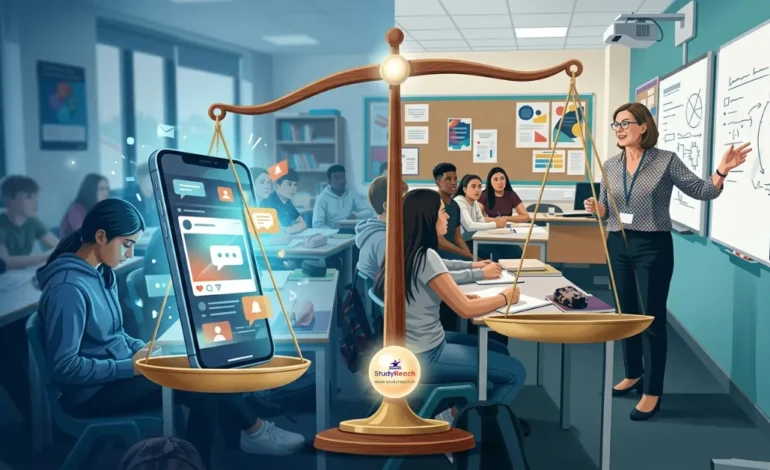
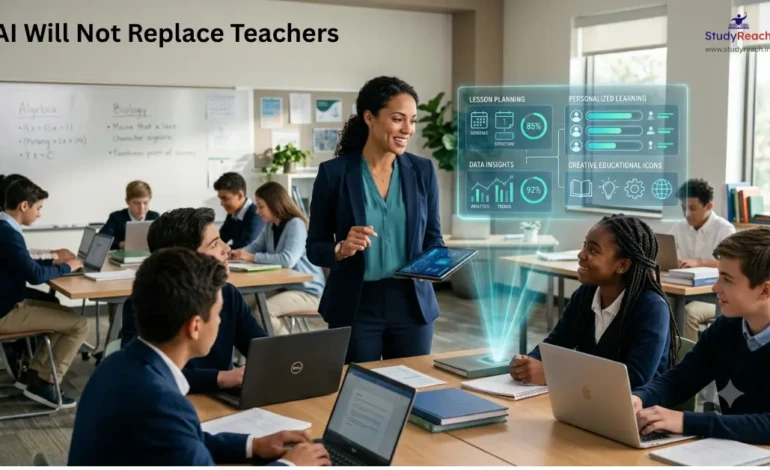
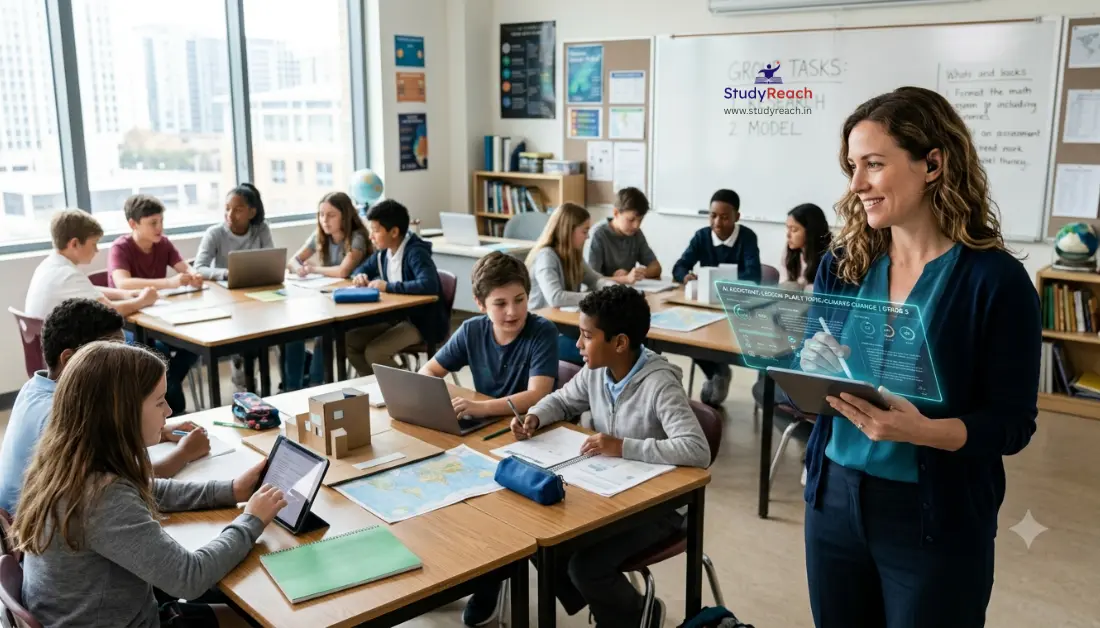
Walk into a classroom today and you may find something that would have seemed unusual only a few years ago: students using AI to brainstorm ideas, teachers preparing lesson resources with AI assistance, and schools discussing how technology should be used without allowing it to replace genuine learning.
Artificial Intelligence is no longer simply a technology topic. It has become an education leadership, teaching and learning issue.
International organisations are also beginning to define the competencies educators and students need in an AI-enabled education system. UNESCO, for example, has developed dedicated AI competency frameworks for both teachers and students.
📌 Key Takeaway
AI is unlikely to make the best teachers irrelevant. Instead, AI can become a powerful teaching assistant — helping educators save time, personalise learning, create resources and focus more on the human side of education.
Why Are Teachers Worried About AI?
It is natural for teachers to feel concerned.
AI can write an essay, generate questions, explain a mathematical concept, create a lesson plan, summarise information and produce classroom activities within seconds.
So an obvious question arises:
The answer begins by understanding what teaching actually is.
A teacher does not simply deliver information. A teacher observes students, understands emotions, identifies misconceptions, motivates reluctant learners, manages classroom relationships, encourages curiosity, builds confidence and makes thousands of small decisions that technology cannot fully understand in context.
Education is not only about information. It is about human development.
AI vs Teacher: They Do Not Perform the Same Job
| AI Can Help With | Teachers Bring |
|---|---|
| Generating lesson ideas | Understanding individual students |
| Creating practice questions | Building motivation and confidence |
| Summarising information | Developing judgement and wisdom |
| Providing instant explanations | Reading classroom emotions and behaviour |
| Creating differentiated resources | Choosing what is appropriate for a particular learner |
| Automating repetitive tasks | Mentoring, guiding and inspiring students |
The real opportunity is not “AI versus teachers”. It is teachers + AI versus outdated teaching practices.
How AI Can Make a Good Teacher Even Better
When used thoughtfully, AI can reduce some of the repetitive work that consumes teachers' time.
1. Faster Lesson Planning
A teacher can use AI to generate possible lesson structures, activities, examples and questions. The teacher then reviews, modifies and improves them according to the curriculum and the needs of the class.
The important word is reviews.
AI should create possibilities. The teacher should make the professional decision.
2. More Personalised Learning
One classroom may contain students who learn at very different speeds.
AI can help teachers prepare different versions of practice material — for example, foundational questions for students who need support and more challenging problems for advanced learners.
Do not use AI simply to give every student “more worksheets”. Use it to help create better-matched learning experiences.
3. Better Feedback
Teachers spend considerable time reviewing student work. AI tools can assist in identifying common errors, suggesting feedback categories and generating first-draft comments.
But the final feedback should remain under teacher supervision — particularly when it involves judgement about a student's progress, behaviour or learning needs.
4. Creating More Engaging Learning Materials
Teachers can use AI to brainstorm:
- Real-world examples
- Discussion questions
- Debate topics
- Project ideas
- Case studies
- Role-play situations
- Revision activities
- Quiz questions
This can shift the teacher's role from repeatedly preparing basic material to designing richer learning experiences.
The Teacher's Role Is Changing — Not Disappearing
The teacher of the future may spend less time acting as the sole source of information and more time acting as a:
🎯 Learning Designer
Designing meaningful learning experiences instead of simply delivering content.
🧭 Learning Guide
Helping students decide what information is reliable, relevant and useful.
🤝 Mentor
Supporting confidence, motivation, communication and personal growth.
🔎 Critical-Thinking Coach
Teaching students to question, verify and challenge AI-generated information.
UNESCO's AI Competency Framework for Teachers identifies competencies across human-centred thinking, ethics, AI foundations and applications, AI pedagogy and professional learning.
But There Is a Serious Risk: Overdependence on AI
AI can be helpful. It can also become a shortcut.
If a student asks AI to write every assignment, solve every problem and answer every question, the student may complete more work while actually learning less.
The bigger danger is allowing students to use AI without developing the ability to think independently.
This is why schools should not simply ask, “Are students using AI?”
A better question is:
“What are students learning while they use AI?”
AI Literacy Must Become Part of Education
Students need to understand that AI is not an infallible source of truth.
They should learn to:
- Question AI-generated information.
- Check important facts using reliable sources.
- Recognise that AI can make mistakes.
- Understand privacy and responsible data use.
- Use AI without losing their own voice.
- Understand academic honesty.
- Use AI to improve thinking rather than avoid thinking.
- Recognise bias and limitations in AI-generated responses.
UNESCO's AI Competency Framework for Students focuses on developing students who can engage with AI in a responsible, critical and creative manner.
What Should Schools Do Now?
Schools do not need to choose between completely banning AI and allowing unlimited AI use.
A better approach is to develop a clear, age-appropriate AI-use policy.
For School Leaders
- Create clear expectations for responsible AI use.
- Provide practical AI training for teachers.
- Protect student privacy.
- Review assessment methods.
- Encourage teachers to experiment responsibly.
- Teach students how to verify AI-generated information.
- Keep human relationships at the centre of education.
For Teachers
- Learn one useful AI tool at a time.
- Use AI to save preparation time.
- Check every important AI-generated output.
- Never upload confidential student information into an AI system without appropriate safeguards.
- Design assignments that require personal reflection, discussion, application and reasoning.
- Teach students how to use AI responsibly rather than simply telling them not to use it.
For Parents
- Talk to children about responsible AI use.
- Ask how they used AI rather than simply asking whether they used it.
- Encourage children to attempt problems independently first.
- Discuss fact-checking and online safety.
- Make sure AI does not replace reading, writing, conversation and real-world experiences.
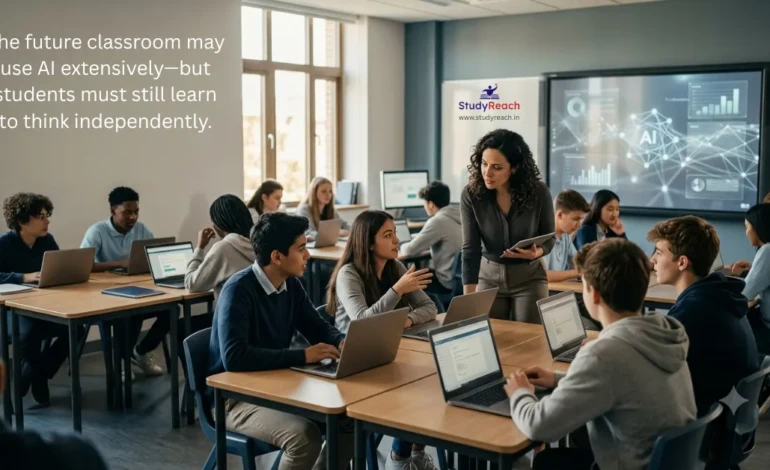
The Future Classroom May Be Human + AI
Imagine a classroom where the teacher has an intelligent assistant working in the background.
The AI helps prepare differentiated practice, generates alternative explanations, identifies common patterns in student responses and suggests activities.
The teacher then uses professional judgement to decide what the students actually need.
The teacher speaks to the student who is struggling.
The teacher notices that another student has lost confidence.
The teacher challenges a high-performing student with a deeper question.
The teacher creates an environment where students feel safe enough to ask questions and make mistakes.
That is the future worth building.
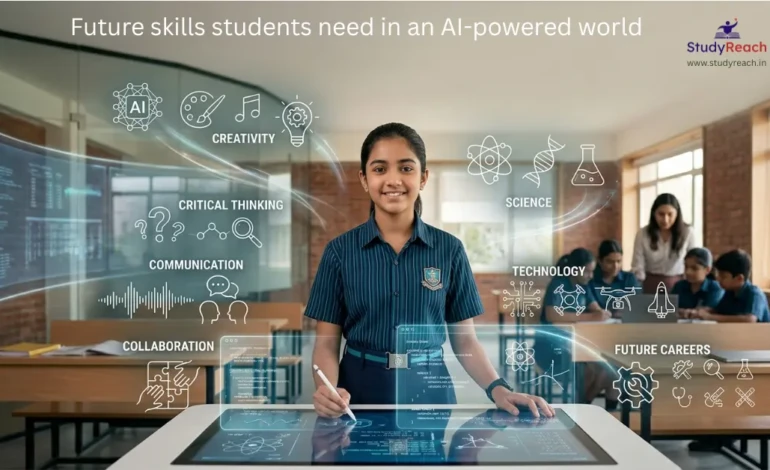
5 Skills Every Teacher Should Develop in the AI Era
1. AI Literacy
Understand what AI can do, where it fails and how to use it responsibly.
2. Prompting & Instruction
Learn how to give AI clear educational instructions and evaluate its responses.
3. Critical Evaluation
Check AI outputs instead of accepting them automatically.
4. AI-Supported Pedagogy
Understand when AI actually improves learning — and when it does not.
5. Human Skills
Strengthen empathy, communication, mentoring, creativity and leadership — the areas where teachers remain uniquely valuable.
Will AI Replace Teachers?
It is impossible to predict every technological development. AI will certainly change many tasks currently performed by teachers.
But replacing the entire role of a teacher is a very different proposition.
Education involves relationships, judgement, values, motivation, social development and human connection. These are not simply information-processing tasks.
The more realistic future is therefore not:
AI replaces teachers.
It is:
🚀 Teacher + AI = A New Model of Education
The teachers who understand AI, question it, guide students in using it responsibly and combine it with strong pedagogy may become even more valuable.
Final Thoughts
The question “Will AI replace teachers?” makes for an interesting headline, but it may be the wrong question.
The better question is:
That is where the real opportunity lies.
AI can generate information. It can create content. It can analyse patterns. It can automate repetitive tasks.
But education requires something more.
It requires a person who can look at a student and say:
“I know you can do better. Let me help you.”That human connection remains at the heart of teaching.
The future of education may not belong to AI alone.
It may belong to teachers who know how to use AI without losing what makes teaching human.
What Do You Think?
Will AI make teachers more powerful, or will excessive dependence on technology weaken traditional teaching?
Share your thoughts with StudyReach.
Frequently Asked Questions
Will AI replace teachers in the future?
AI is likely to automate and assist with many teaching-related tasks, but teaching also involves mentoring, judgement, relationships, motivation and human interaction. The more likely future is teachers working with AI rather than being completely replaced by it.
How can teachers use AI in the classroom?
Teachers can use AI for lesson planning, brainstorming activities, creating differentiated practice, generating questions, preparing examples and supporting feedback. Teachers should review and adapt AI-generated material before using it with students.
Should students be allowed to use AI for homework?
Schools should establish clear rules based on the learning objective. AI can be useful as a tutor, brainstorming partner or feedback tool, but students should not use it to bypass the thinking, writing or problem-solving that an assignment is designed to develop.
Teachers will increasingly benefit from AI literacy, critical evaluation, responsible technology use, AI-supported pedagogy, creativity, communication, mentoring and strong human-centred teaching skills.
What does UNESCO say about AI competencies for teachers?
UNESCO's AI Competency Framework for Teachers identifies 15 competencies across five areas: human-centred mindset, ethics of AI, AI foundations and applications, AI pedagogy, and AI for professional learning.
Sources & Further Reading
- UNESCO – AI Competency Framework for Teachers
- UNESCO – AI Competency Framework for Students
- UNESCO Digital Library
Artificial Intelligence is no longer simply a technology topic. It has become an education leadership, teaching and learning issue. In fact, AI is already changing the way students learn and teachers work. Read our detailed guide on how AI is reshaping education in India to understand the broader transformation.
Technology, however, should not replace sound pedagogy. Teachers still need effective instructional models to engage students, explore concepts and assess understanding. For a practical teaching framework, read our complete guide to the 7Es Framework Teaching Model.

About the Author
Shailendra Porwal is an experienced school educator and Principal with extensive experience in school leadership, teaching-learning practices, academic planning and educational administration. Through StudyReach, he shares practical insights for teachers, parents, students and education leaders.