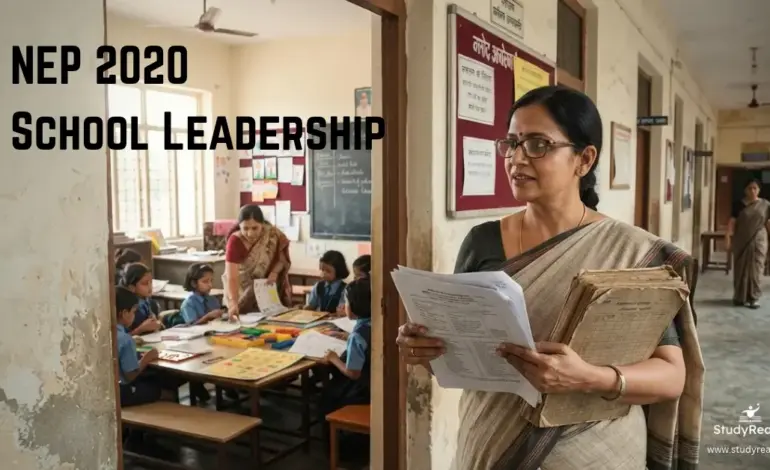
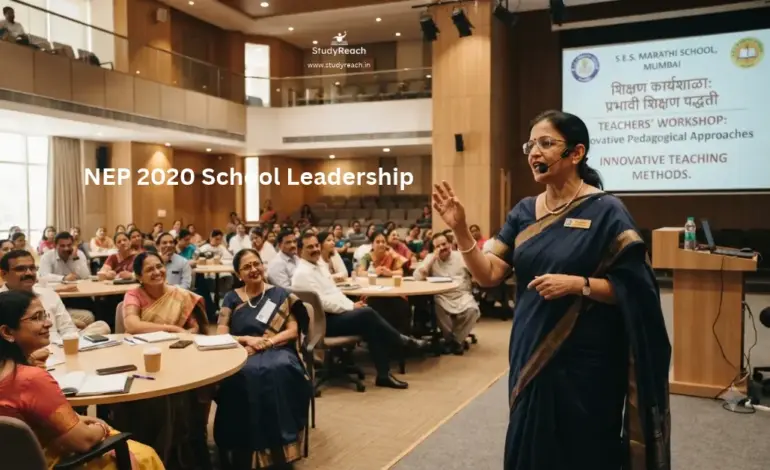
NEP 2020 School Leadership Lessons From Sangli’s Model

Sangli has recently given us a remarkable blueprint. Over 970 schools are showing us how to execute policy. As an educator, I watch policy documents gather dust.
How do we translate grand visions into actual daily practice? When I examine NEP 2020 School Leadership, I often look for ground-level execution rather than glossy brochures.
Policy is only as good as the headmaster driving it. Let us explore what Sangli got right.
The Core of NEP 2020 School Leadership
True leadership is not about managing paperwork. It is about building a culture of joyful inquiry.
The Sangli initiative proves that administrative willpower matters more than massive budgets.
When principals take ownership, classrooms transform automatically. We can read more about national policy guidelines directly from the Ministry of Education, Government of India to align our local school goals.
Effective NEP 2020 School Leadership requires decentralization. Teachers must feel empowered to experiment with experiential learning.
Students must feel safe asking unconventional questions. That is where real systemic change begins.
Sir, hamare school mein naye teaching methods toh aa gaye hain, par principal sir ko bhi toh daily routines badalni padengi na?
That student observation hits home deeply. Change cannot happen only at the teacher level.
School leaders must model the curiosity they wish to see in children. Let us look at what practical implementation demands from us daily.
- Empowering headmasters as academic mentors rather than mere accountants.
- Shifting focus from rote memorization to foundational literacy and numeracy.
- Encouraging peer-to-peer teacher training within school clusters.
- Involving local communities in curriculum enrichment and feedback loops.
Without these steps, policy remains an empty slogan.
For a deeper dive into ground realities, you can read our detailed piece on NEP 2020 School Leadership: Ground Realities from Indian Classrooms.
Shifting Paradigms in School Management
Traditional Indian schooling relied heavily on rigid hierarchy. Today’s multifaceted challenges demand a collaborative approach. Let us compare traditional administration with progressive management styles.
| Instead of only… | Why not also… |
|---|---|
| Focusing on exam board percentages | Tracking holistic student competency development |
| Issuing top-down circulars | Conducting collaborative faculty brainstorming sessions |
| Treating parents as annual visitors | Engaging parents as active co-educators |
| Resisting technological updates | Embracing digital platforms for administrative ease |
This structural shift is essential for modern institutions. We must prepare our children for a complex future.Acquiring futuristic competencies is no longer optional.
You can also review our insights on 10 Skills Every Student Will Need in an AI-World to connect classroom management with modern technological realities.
My Question to Parents
Are you asking your child’s school leadership about experiential learning outcomes?
Grades are important, but critical thinking matters infinitely more in the long run.
My Question to Teachers
Are you stepping up to take leadership roles within your department?
Do not wait for permission to innovate inside your four walls.
Final Thoughts
Sangli has shown us the roadmap. Now the rest of India must walk the talk.
Strong school leaders build fearless learners, transforming national policy into everyday classroom magic.