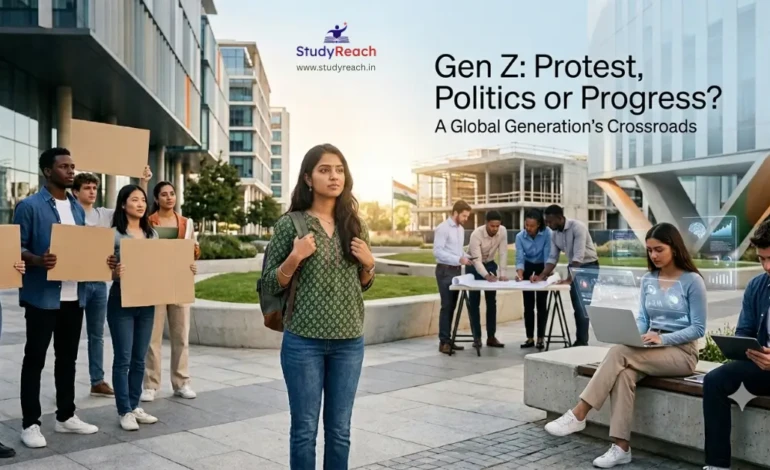
Gen Z

Gen Z: Protest, Politics or Progress?
What Should Young People Focus on in the Age of AI?
There is something fascinating about today’s young generation.
Gen Z is more connected, more informed and more vocal than any generation before it.
A student can watch a political speech in the morning, attend an online class in the afternoon, use AI to complete a research task in the evening and discuss career opportunities with someone sitting thousands of kilometres away — all on the same phone.
But this connectivity has also created a difficult question: Where should young people put their limited time, energy and attention?
My answer is probably not what either side expects.
It should not be an “either-or” choice.
Young people have every right to question systems, raise their voices and participate in democratic life.
But they also have a responsibility to build themselves.
And in the age of artificial intelligence, that second responsibility has become more urgent than ever.
Gen Z Is Already Changing Politics
The debate around Gen Z and politics is no longer theoretical.
Across the world, young people have been visible in protests demanding political reform, greater accountability, better opportunities and action on social and economic concerns.
Recent analysis by Chatham House described waves of youth protests across South Asia, Africa and North America, while other reporting has highlighted Gen Z-led movements in countries including Bangladesh, Nepal and India.
In other words, Gen Z is not politically silent.
In many places, it is doing exactly the opposite.
It is speaking.
It is organising.
It is questioning.
And sometimes, it is taking to the streets.
That is not automatically a bad thing.
The important question is not whether young people should have a voice. They should. The deeper question is how that voice is used and whether it leads to meaningful change.
But Here Is the Other Side of the Story
While Gen Z is becoming more politically visible, another transformation is happening at almost unbelievable speed.
Artificial intelligence is changing education and work.
Stanford’s 2026 AI Index reports that more than 80% of U.S. high-school and college students use AI for school-related tasks, while only about half of middle and high schools have AI policies and just 6% of teachers say those policies are clear.
That means young people are entering a world where the technology is moving faster than many educational systems.
And the workplace is changing at the same time.
The question facing a 20-year-old today is therefore very different from the question facing a 20-year-old twenty years ago.
It is increasingly, “What can you actually do?”
The World Gen Z Is Entering Is Not Waiting
Imagine two young people graduating in the same year.
Both have degrees.
Both have studied hard.
Both have similar academic marks.
But one has also learned how to use AI responsibly, communicate clearly, solve problems, analyse information, work in teams and build something independently.
The other has spent most of the same time waiting for the “right” opportunity.
Who is more prepared for the future?
The answer is uncomfortable — but increasingly obvious.
The future will reward capability, not simply qualification.
India’s Young People Face a Special Challenge
For millions of Indian families, the traditional definition of success remains familiar:
- Good marks.
- Good degree.
- Competitive examination.
- Government job.
- Stable income.
- Secure future.
There is nothing wrong with wanting stability.
A government job can be a respectable and meaningful career.
Competitive examinations can provide a genuine pathway for talented young people.
The problem begins when one career pathway becomes the only definition of success.
When Preparation Becomes a Waiting Room
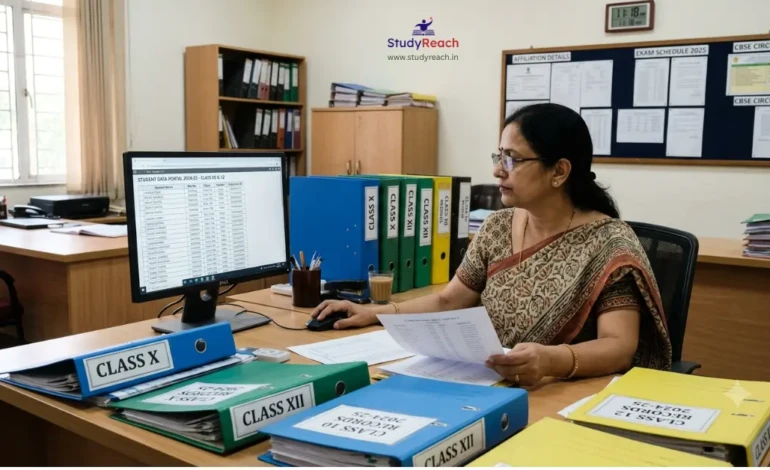
I have seen students spend years preparing for competitive examinations.
One attempt becomes two.
Two become three.
Then the student tells the family:
“One more year.”
There is nothing wrong with trying again when the goal is realistic and the preparation is purposeful.
But there comes a point when a young person has to ask a difficult question:
That distinction can change a life.
India’s own coaching-centre guidelines recognise the importance of informing students about alternative career options and making it clear that coaching does not guarantee success in competitive examinations.
That is an important message.
A coaching centre should prepare a student for an examination. Education should prepare the student for life.
Skills Cannot Be a Backup Plan Anymore
For a long time, students often treated skills as something they could learn later.
First get the degree.
Then get the job.
Then learn the practical work.
That model is becoming increasingly risky.
The World Bank has highlighted the importance of preparing India’s huge youth population for productive employment, self-employment and entrepreneurship, while employers increasingly need broader employability skills such as problem-solving, teamwork, adaptability and the ability to use digital technologies.
That is exactly where education has to change.
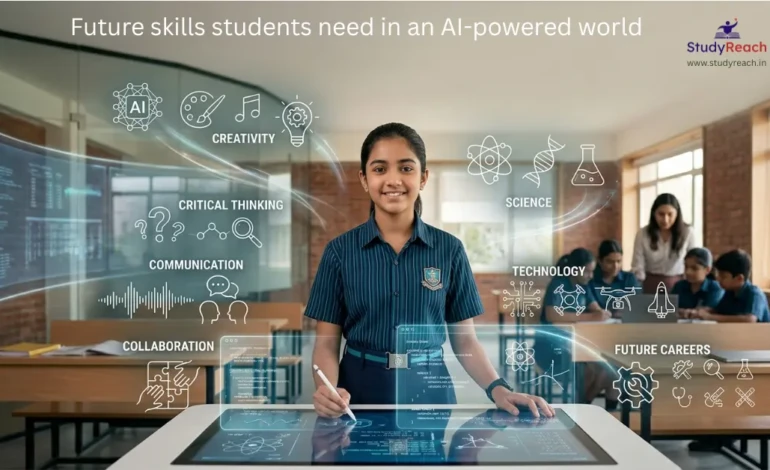
🤖 AI Literacy
Young people need to understand AI, not simply use AI. They need to know its strengths, limitations, risks, ethics and practical applications.
🧠 Critical Thinking
In a world full of viral videos, edited clips and AI-generated content, the ability to ask “Is this actually true?” is becoming a survival skill.
🗣️ Communication
A brilliant idea has limited value if a person cannot explain it, defend it and work with other people.
💡 Problem Solving
Employers need people who can identify problems and create solutions — not only people who can pass examinations.
💼 Entrepreneurial Thinking
Every young person does not need to become an entrepreneur. But every young person should understand how value is created.
🔄 Adaptability
The career a student enters at 22 may not look the same at 32. The ability to keep learning may become more important than the first qualification.
What About Protests?
This is where the discussion becomes sensitive.
Should young people protest?
Yes — when they believe something is wrong, peaceful civic participation can be an important part of democracy.
Should every young person join every protest?
No.
Neither should every young person blindly support a political party, an influencer, a social-media campaign or a viral speech.
The responsibility of a young citizen is not simply to react.
It is to think.
Before joining a movement, ask five questions:
- What exactly is the issue?
- What evidence do I have?
- What outcome do I want?
- Is my participation likely to help?
- Can I contribute without harming myself or others?
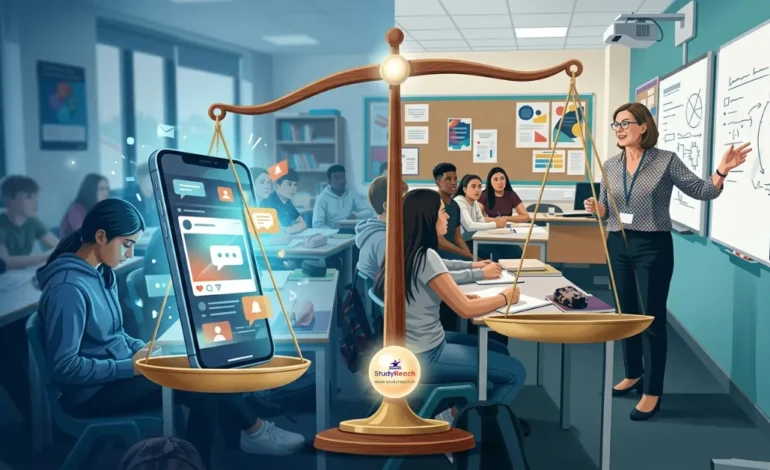
Social Media Has Changed Activism
Previous generations needed newspapers, meetings, political organisations or physical networks to organise.
Gen Z can mobilise thousands of people from a smartphone.
That is powerful.
But power without judgement can also become dangerous.
A thirty-second video can create anger before a person knows the full story.
A viral speech can make an argument sound true simply because thousands of people are sharing it.
An edited video can remove the context that changes the entire meaning.
And an algorithm can repeatedly show a young person the same type of content until it feels like the whole world agrees.
Before sharing, supporting or protesting, young people need something more powerful than emotion: verification.
Is Gen Z Becoming Weak?
This is another question worth asking — but I would answer it differently.
Gen Z is not weak.
It is facing an unusually complicated world.
It has inherited climate anxiety, economic uncertainty, social-media pressure, rapidly changing technology, intense competition and a workplace being reshaped by AI.
At the same time, Gen Z has access to knowledge, technology and global networks that previous generations could not imagine.
The issue is therefore not weakness.
The issue is direction.
It needs direction.
What If Personal Development Is Also Nation Building?
This is the question I would like young people to think about most seriously.
Suppose a 23-year-old decides not to spend every week arguing about politics.
Instead, that person learns AI.
Builds professional skills.
Gets a job.
Starts a business.
Supports parents.
Helps a younger sibling study.
Pays taxes.
Follows the law.
Votes thoughtfully.
Helps someone in the community.
Creates employment for another person.
Is that person doing nothing for the country?
Of course not.
Nation building does not happen only on a protest march.
It also happens in classrooms, laboratories, hospitals, businesses, farms, offices, workshops, start-ups, homes and communities.
Family Responsibility Is Not Selfishness
There is another idea young people sometimes hear:
“If you only think about yourself and your family, you are not thinking about society.”
I don’t completely agree.
Family responsibility is one of the foundations of a stable society.
A young person who becomes financially independent can support parents.
A young person who learns useful skills can create opportunities for others.
A young person who becomes emotionally mature can build a healthier family.
A young person who becomes financially responsible can reduce pressure on the next generation.
Of course, society cannot function if everyone thinks only about themselves.
But neither can society progress if young people never invest in their own development.
It can be one of its foundations.
The USA Is Facing a Similar Question
This is not only an Indian conversation.
American Gen Z is also entering a rapidly changing education and employment environment.
The 2026 Stanford AI Index reports that more than 80% of U.S. high-school and college students now use AI for school-related work.
At the same time, American college students are increasingly questioning which degrees and majors will remain valuable as AI changes the workplace.
The result is a broader global conversation:
A certificate? A job? A career? Or the ability to keep adapting when all three change?
Gen Z Has Something Previous Generations Did Not
A young person today can learn almost anything.
Coding.
Graphic design.
Digital marketing.
Data analysis.
Video production.
Artificial intelligence.
Foreign languages.
Entrepreneurship.
Financial literacy.
Communication.
There are free and low-cost learning resources available online, including government-supported digital learning and skilling platforms in India.
The challenge is no longer simply access to information.
The challenge is choosing what to learn and actually becoming good at it.
The New Definition of a Successful Young Person
Perhaps we need to change our definition of success.
| Old Question | Better Question for 2026 |
|---|---|
| What degree do you have? | What can you do with what you know? |
| Which exam are you preparing for? | Which problems can you solve? |
| How many followers do you have? | How much value can you create? |
| Which political side are you on? | What evidence supports your position? |
| Can you get a government job? | Can you build a sustainable career? |
| Can you use AI? | Can you use AI responsibly and intelligently? |
| How loudly can you speak? | Can you listen, think and communicate effectively? |
So, Protest or Progress?
Here is where I would like to challenge both sides.
If someone says:
I would disagree.
Young people are citizens. They have every right to participate in democratic life.
But if someone says:
I would disagree with that too.
A young person should be free to choose how to contribute.
Some will become activists.
Some will become teachers.
Some will become scientists.
Some will become entrepreneurs.
Some will join the civil services.
Some will become doctors, engineers, artists, farmers, skilled technicians or business leaders.
Some will build their careers quietly and support their families.
All of these can contribute to society.
The Real Danger Is Not Protest
The real danger is mindless participation.
Mindlessly following a political leader.
Mindlessly following an influencer.
Mindlessly following a viral video.
Mindlessly following a crowd.
And, on the other side, mindlessly following the traditional idea that the only respectable career is a government job.
Both are forms of dependence.
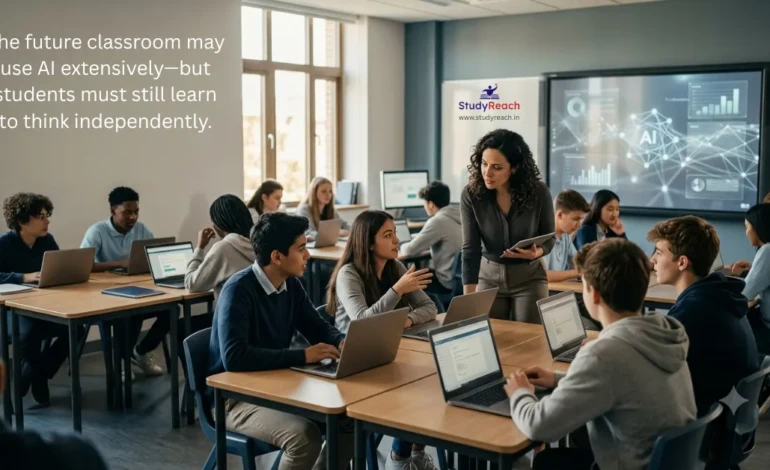
The goal of education should be to create young people who can think independently.
Don’t become a follower of a social-media algorithm.
Don’t become a follower of a career stereotype.
Become the person who can think, decide and build.
What Should Schools Teach Gen Z?
If this is the world students are entering, schools cannot limit education to examination preparation.
Students need opportunities to develop:
Critical Thinking
Question information before accepting or sharing it.
AI Literacy
Understand how AI works, where it helps and where it can mislead.
Financial Literacy
Understand money, saving, investing, taxes and responsible financial decisions.
Communication
Learn to express ideas clearly and respectfully.
Problem Solving
Move from identifying problems to designing practical solutions.
Civic Responsibility
Understand rights, duties, democracy, law and responsible participation.
A 5-Question Test for Every Young Person
Before spending hours on a political debate, social-media argument, protest, exam preparation or even a career decision, perhaps every young person should ask:
- Will this make me more knowledgeable?
- Will this make me more skilled?
- Will this make me more independent?
- Will this help my family or community?
- Will this move me closer to the person I want to become?
If the answer is yes, continue.
If the answer is no, perhaps it is time to reconsider how much time and energy is being spent.
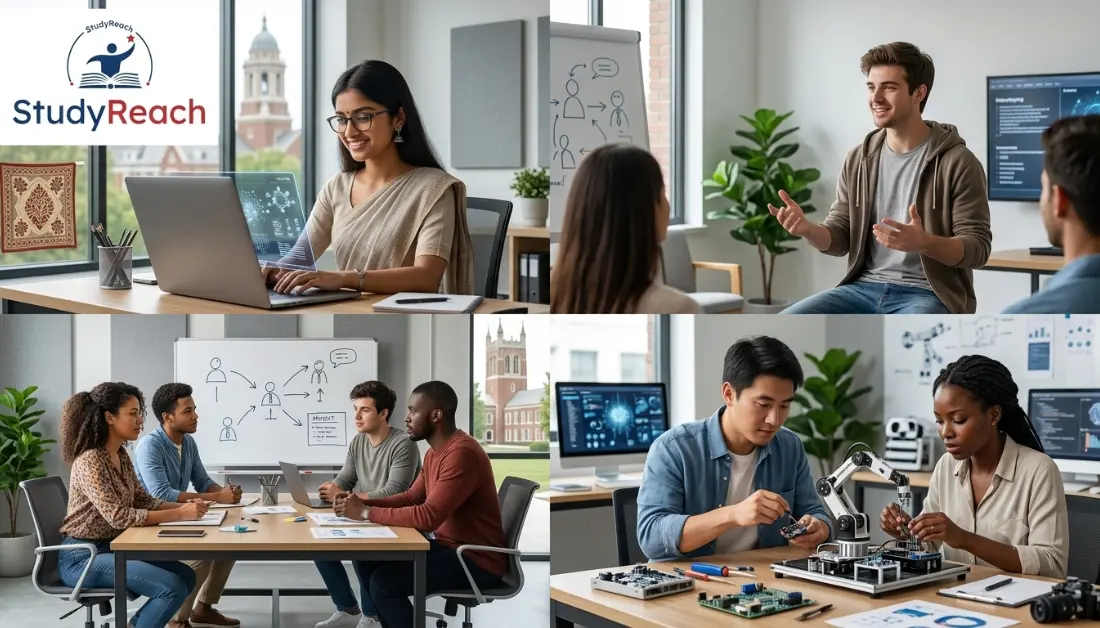
What Parents Should Understand About Gen Z
Parents also have a role to play.
Instead of asking only:
“Beta, government job ki preparation kab tak chalegi?”
perhaps ask:
“What skills are you building alongside your preparation?”
Instead of saying:
“Don’t waste your time.”
ask:
“Where are you investing your time?”
And instead of deciding that one career is the only respectable option, parents can help children understand the wider world of opportunities.
And What Should Gen Z Ask Parents?
Young people should also understand something important.
Parents are often afraid because they have seen uncertainty.
They have experienced economic pressure.
They remember a time when a stable job mattered enormously.
So when a parent says, “Get a secure job,” it may come from concern rather than a lack of ambition.
The solution is not to fight the parent.
The solution is to show a better plan.
Say: “Here is what I want to learn, here is the skill I am building, here is the career path I am exploring, and here is how I plan to become financially independent.”
Progress Requires Both Voice and Capability
A country needs young people who will speak when something is wrong.
But it also needs young people who will build when something is missing.
It needs people who can question.
And people who can create.
People who can protest peacefully.
And people who can solve problems professionally.
People who can demand better opportunities.
And people who can create opportunities for others.
Capability without responsibility can create selfishness.
But voice + capability + responsibility can create progress.
My Message to Gen Z
If you are a young person reading this, I am not asking you to stop caring about society.
I am asking you to care about your own development with the same seriousness.
Question the system when necessary.
Participate when you believe participation can help.
Vote.
Read.
Verify.
Think.
But also learn.
Build.
Work.
Create.
Become financially independent.
Support your family.
Develop skills that the world needs.
And never allow another person’s speech, ideology, algorithm or expectation to become a substitute for your own thinking.
Final Thoughts: Protest, Politics or Progress?
So, should Gen Z choose protest, politics or progress?
I don’t think the answer is to choose only one.
The real answer is maturity.
A mature young citizen knows when to speak.
When to listen.
When to question.
When to protest peacefully.
When to step back.
When to study.
When to build a career.
When to support family.
And when to learn a completely new skill because the world has changed.
Spend some of it building the person who can change the world.
One Last Question for Gen Z
When you look back at the next ten years of your life,
what do you want to remember?
The speeches you heard?
The protests you attended?
Or the skills you built, the people you helped, the family you supported and the future you created?
The choice is not always “protest or progress”.
Sometimes the greatest progress begins when a young person decides to become capable.
Frequently Asked Questions
Should students prepare only for government jobs?
Government employment can be an excellent career option, but students should not assume that it is the only successful pathway. Building transferable skills and understanding multiple career options can make young people more adaptable and resilient.
Why are Gen Z protests becoming important globally?
Young people have increasingly participated in movements around corruption, inequality, education, employment and political accountability. In recent years, Gen Z-led movements have received international attention in several countries.
Should Gen Z participate in politics?
Young people are citizens and can participate in democratic processes, including voting, public discussion and peaceful civic action. However, participation should be informed rather than driven only by viral content, political speeches or social-media pressure.
Are skills more important than degrees for Gen Z?
Degrees remain valuable, particularly for professions that require formal qualifications. However, employers increasingly expect practical abilities such as communication, problem-solving, adaptability, digital skills and AI literacy alongside formal education.
Government employment can be an excellent career option, but students should not assume that it is the only successful pathway. Building transferable skills and understanding multiple career options can make young people more adaptable and resilient.
Why is AI important for Gen Z?
AI is already being used by students and is changing workplace expectations. Gen Z therefore needs both AI literacy and human skills such as critical thinking, communication, creativity, judgement and collaboration.
Related StudyReach Articles
- The Future of Education: 10 Skills Every Student Will Need in an AI-Powered World
- Study to Learn, Not to Score: A Better Education Guide
- How to Choose the Right Career After Class 12 – Complete Parents Guide
- How to Motivate Students Who Lost Interest in Studies
- Cell Phone Ban in Schools: Should Phones Be Banned?
About the Author
Shailendra Porwal
Shailendra Porwal is an experienced educator, school leader and education professional with extensive experience in academic planning, school leadership, teaching-learning practices and educational administration.
As Founder and Editor of StudyReach.in, he writes about education, students, teachers, parents, careers and the changing skills young people need in a rapidly evolving world.
His writing focuses on a simple belief: education should prepare young people not only to pass examinations, but to think independently, build meaningful careers and contribute responsibly to society.