

After the Investiture Ceremony — What Next?
You pinned the badge. The oath was taken. The photos were clicked. Now what? If nothing changes on Monday morning, the ceremony was just an event — not a leadership programme. Let’s fix that.
📋 Table of Contents
- Let’s Be Honest About What Usually Happens
- The First Meeting — Within 7 Days
- What Each Role Should Actually Do
- 20 Responsibilities That Build Real Leaders
- Morning Assembly — Your Biggest Leadership Training Ground
- The Monthly Leadership Calendar
- How to Run a Monthly Review Meeting
- Mistakes Most Schools Make
- FAQ
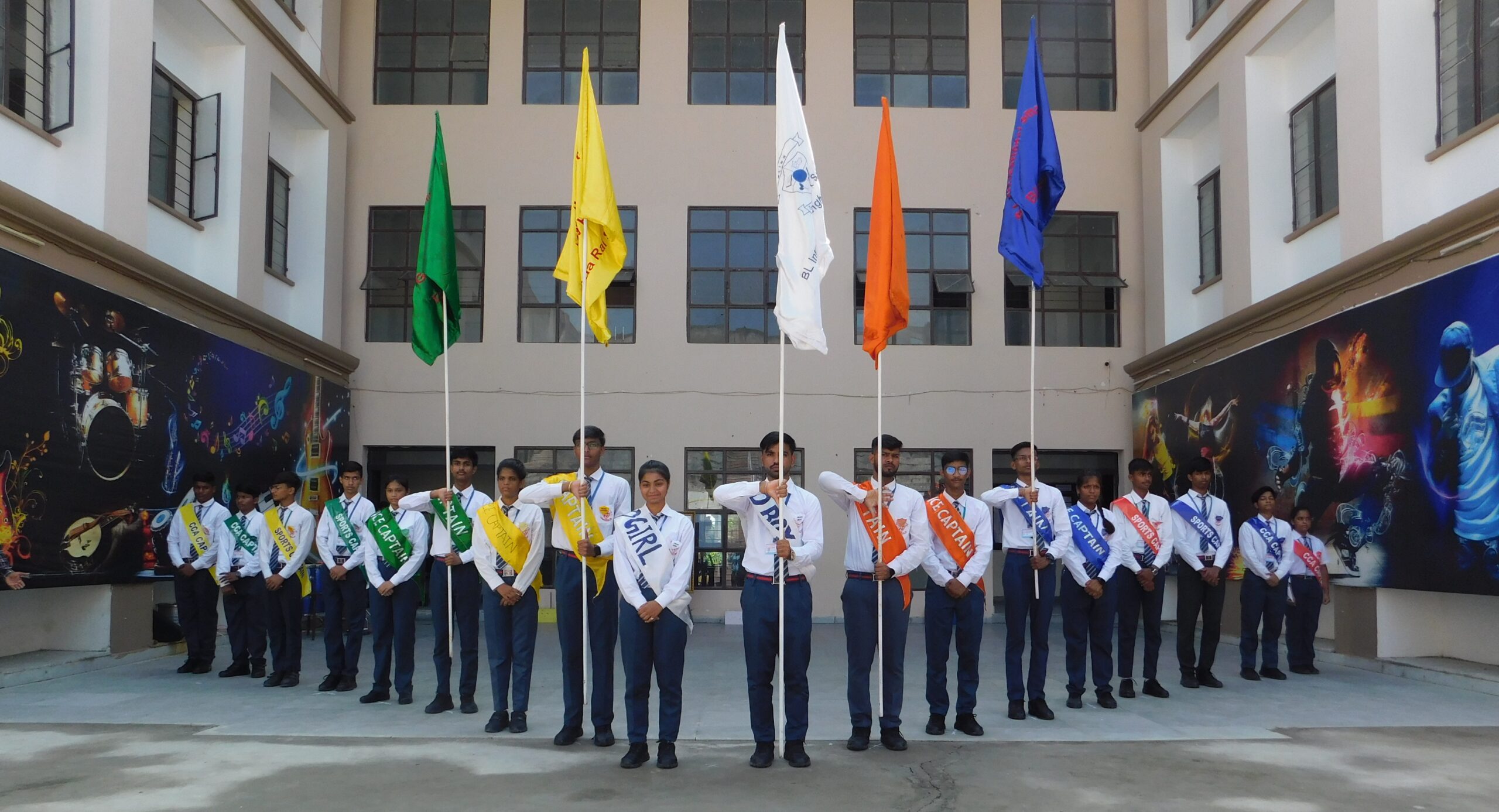
Let me ask you something. Think about the last Investiture Ceremony at your school. The stage was set, the parents were seated, the Principal pinned the badges one by one — Head Boy, Head Girl, House Captains, Cultural Heads, Sports Captains. The oath was read out. Everyone applauded. Photographs happened.
And then? What happened on the very next Monday?
If your honest answer is “not much” — you are not alone. This is the reality in most schools across India. We invest in the ceremony. We forget to invest in the leadership.
I’ve been a school principal for over two decades. And I can tell you with complete certainty — a badge without responsibility is just a piece of metal. The real work begins the morning after the ceremony. This article is about that work.
1. Let’s Be Honest About What Usually Happens
🤔 Does This Sound Familiar?
The Head Boy was appointed in July. It’s now October. He sits at the same desk, follows the same routine, has attended zero leadership meetings, has been given zero responsibilities beyond “stand at the front during assembly.” Ask him what he’s done as Head Boy — and he’ll look at the floor.
This isn’t his fault. Nobody told him what to do. Nobody sat with him. Nobody asked him what he wanted to change. We gave him a title and expected leadership to follow automatically. It doesn’t work that way.
Here’s the thing — the students you selected are capable. That’s why you selected them. The problem isn’t the student. The problem is the system around them.
Leadership is a skill. Like every other skill, it needs practice, feedback, real tasks, and someone who takes it seriously. If you want your student leaders to actually lead, you need to build that environment for them — deliberately, consistently, and starting this week.
“The function of leadership is to produce more leaders, not more followers.”
— Ralph Nader · Relevant for every school that takes student leadership seriously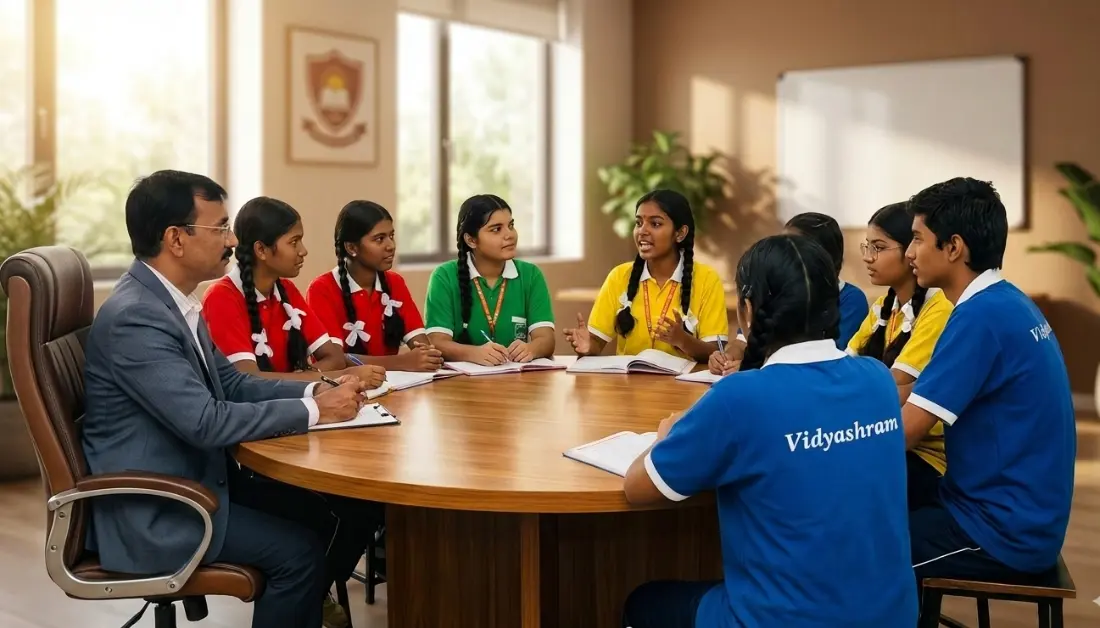
2. The First Meeting — Within 7 Days of the Ceremony
Here is the first thing I want you to do — and I mean this week, not “sometime soon.” Call all your appointed leaders into the conference room. Sit with them. Have a proper, structured meeting. Not an informal chat in the corridor. A real meeting with an agenda.
Why within 7 days? Because the first week after the ceremony is when their excitement and sense of purpose is at its highest. If you don’t channel that energy immediately, it dissipates. And once the routine takes over, it’s very hard to bring it back.
📋 First Leadership Meeting — Agenda (60 Minutes)
Welcome Each Leader — By Name and Role
Don’t just say “welcome everyone.” Address each student individually — “Priya, you are our Head Girl this year. Arjun, you are the Sports Captain for Nehru House.” This moment of personal acknowledgment sets the tone. They feel seen.
Share the School’s Vision for This Year
Tell them what you, as a principal, are working toward this year. “We want to improve our morning assembly quality. We want to make our Annual Day the best in recent memory. We want every junior student to feel welcomed.” Make them feel like partners in this mission — not spectators.
Ask Them — “What Do You Want to Change?”
This is the most important part of the entire meeting. Go around the room. Give each leader 2 minutes to speak. What bothers them about the school? What do they wish was different? Listen — really listen — and write it down. When students see their ideas implemented later, their ownership multiplies.
Distribute Written Responsibilities
Hand each leader a printed card or one-page document with their specific responsibilities. Do not just tell them verbally — verbal instructions are forgotten by the next morning. Written documents create accountability. They can refer back to it. So can you.
Lock the Monthly Review Calendar
Before they leave this room, fix the dates for your monthly review meetings for the entire academic year. Say it clearly: “We meet on the first Friday of every month, 2:30 PM, conference room. Mark it.” If you don’t fix it now, “we’ll schedule it later” means it never happens.
3. What Each Role Should Actually Do
One of the biggest gaps I see across schools is this — roles are created, but never defined. “Head Boy” means different things in different schools. Sometimes it means nothing at all. Let’s change that.
Here are specific, practical responsibilities for each common leadership role. Not vague — concrete. The kind that a student can look at and know exactly what is expected of them.
The School’s Face
- Represent students in principal’s monthly meeting
- Give school tours to new students and visitors
- Address the school in special assemblies
- Serve as MC at school events
- Collect and escalate student grievances
- Chair the monthly student leaders’ meeting
The House’s Heartbeat
- Conduct the house morning assembly weekly
- Lead the house in inter-house competitions
- Track house points and update the scoreboard
- Organize monthly house meetings
- Update the house notice board every week
- Mentor new students assigned to the house
The Creative Engine
- Plan and coordinate all school cultural events
- Manage the cultural segment in assemblies
- Curate school notice boards and displays
- Identify and encourage student talent
- Contribute content ideas for school magazine
The Field’s Leader
- Assist PET in inter-house sports fixtures
- Lead junior students in morning PT sessions
- Maintain the sports equipment inventory
- Represent students in Sports Day planning
- Support CBSE Cluster tournament team selection
4. 20 Responsibilities That Build Real Leaders
Here’s a practical list of duties you can assign — in rotation, across the year. Every leader should have at least 4 to 5 of these every semester. Mix them up. Don’t give the same student the same tasks every time — that defeats the purpose.
| # | Responsibility | Skill It Builds | Best Suited For |
|---|---|---|---|
| 1 | Conduct morning assembly — script, timing, execution, everything | Public speaking, composure | Head Boy/Girl, House Captains |
| 2 | Welcome and orient new students on their first day | Empathy, communication | All leaders on rotation |
| 3 | Introduce guest speakers at school events after researching them | Research, confidence | Cultural Head, Head Boy/Girl |
| 4 | Plan and announce inter-house competition fixtures | Organisation, planning | House Captains, Sports Captain |
| 5 | Chair the monthly house meeting with a prepared agenda | Meeting facilitation, listening | House Captains |
| 6 | Update the school notice board every week with relevant information | Curation, ownership | Cultural Head, All leaders |
| 7 | Mentor a junior student through the buddy programme | Patience, mentoring | All senior leaders |
| 8 | Submit a cleanliness inspection report to the principal monthly | Observation, accountability | Eco Head, House Captains |
| 9 | Research and present a theme assembly on national or important days | Research, presentation | All leaders in rotation |
| 10 | Collect student feedback on school facilities and present to principal | Advocacy, problem-solving | Head Boy/Girl |
| 11 | Manage announcements and coordination on Sports Day | Multitasking, grace under pressure | Sports Captain, Cultural Head |
| 12 | Coordinate student acts for Annual Day | Collaboration, project management | Cultural Head |
| 13 | Update the visitors’ book with recent school achievements | Writing, institutional pride | Head Boy/Girl |
| 14 | Lead morning PT or Yoga sessions for junior classes | Command presence, physical confidence | Sports Captain |
| 15 | Assist in exam hall seating and logistics | Responsibility, discipline | All leaders, Class 11–12 |
| 16 | Maintain the school garden or eco-zone | Environmental ownership | Eco/Green Head |
| 17 | Share a student perspective at Parent-Teacher Meetings | Courage, communication | Head Boy/Girl |
| 18 | Help resolve a peer conflict under teacher guidance | Conflict resolution, empathy | House Captains |
| 19 | Contribute content ideas for school social media | Digital communication, creativity | All leaders |
| 20 | Write a year-end leadership report — “What I did. What I learned. What I’d do differently.” | Reflection, articulation | All leaders |
5. Morning Assembly — Your Biggest Leadership Training Ground
Every school has a morning assembly. In most schools, teachers run it. Students stand in rows and watch.
I want to challenge you to think differently about this. Morning assembly — when led by students — is the single most powerful leadership training experience you can offer. Standing in front of 500 peers and speaking clearly, confidently, and on time, every week? No classroom lesson teaches what that teaches.
- Week 1: The teacher leads. The designated leader watches, takes notes, observes the structure.
- Week 2: The leader co-conducts alongside the teacher — they handle specific segments.
- Week 3 onwards: The leader conducts independently. Teacher is present but in the background.
- Rotation: Each House Captain gets alternate weeks. No one gets bored, everyone stays sharp.
- Theme assemblies: On important national days, the leader researches the theme and presents it — not just reads from a script.
And here’s something I’ve noticed over the years — the student who was shy, who would never raise his hand in class, often surprises everyone when given the assembly mic regularly. The platform changes people. Give them the platform.
6. The Monthly Leadership Calendar
Leadership development doesn’t happen in one meeting or one event. It needs to be built into the rhythm of the school year. Here’s a quarter-by-quarter framework:
Build the Foundation
Hold the first meeting. Distribute written responsibilities. Give out Leadership Journals. Hand over the morning assembly — starting with Week 2 co-conduct. Get the house notice boards running. Let them feel the weight of the role for the first time.
Give Them Their First Big Task
Teachers’ Day, Gandhi Jayanti — these events should be planned and executed by student leaders, not teachers. Sports Day preparation goes through the Sports Captain. Conduct the first Monthly Review Meeting. House meetings happen formally for the first time.
Bigger Stage, Bigger Responsibility
Annual Day or Winter Carnival — student leaders take the lead on coordination. Mid-year review meeting where leaders present their progress themselves, not teachers reporting on them. Rotate responsibilities so every leader has tried something new. New juniors start being mentored formally.
Legacy and Handover
Each leader writes their year-end leadership report. A final leadership assembly where they address the school. A formal handover brief to the incoming batch — what worked, what didn’t, what advice they’d give. And one permanent contribution to the school — a project, an initiative, a tradition they started.
7. How to Run a Monthly Review Meeting
The monthly meeting is not a performance review — it’s a conversation. But it needs structure, or it becomes a casual chat that achieves nothing. Here’s what works:
Every Leader Shares Three Things
“What I did this month. One challenge I faced. What I’ll do differently next month.” Two minutes each, strictly. This teaches discipline and reflection simultaneously. No rambling. No vague answers.
The Principal Gives One Appreciation and One Challenge
For every student — find something specific they did well and name it. Then give them one constructive challenge for next month. Generic praise doesn’t work. “You did well” is forgettable. “The way you handled the assembly last Tuesday when the microphone stopped working — that showed real composure” — that’s what they’ll remember.
Open Floor — “What Should We Change?”
Five minutes of open discussion. What’s bothering them? What’s not working? Some of the best ideas I’ve received about running my school have come from this five-minute window. And when students see their suggestion implemented — their investment in the school triples.
Confirm Next Month’s Primary Task
Before anyone leaves, tell each leader exactly what their main focus is for the coming month. Verbally and in writing. The meeting ends with clarity, not ambiguity.
8. Mistakes Most Schools Make — And How to Avoid Them
- No follow-up after the ceremony — the single most common, most damaging mistake in school leadership systems
- Only verbal instructions — if it’s not written, it doesn’t exist
- Using leaders only at events — they become props, not leaders
- Zero accountability — no review, no feedback, no growth
- Teacher over-interference — let them try, let them struggle, let them figure it out. That’s where the learning lives
- Selecting based on popularity — look for potential, not applause
- Same students every year — spread leadership exposure to more students
📎 NEP 2020 — student empowerment guidelines: education.gov.in/nep
📎 CBSE student leadership framework: cbse.gov.in
📎 OECD research on school leadership: oecd.org/education
FAQ — Questions I Get Asked Often
🎖️ A Final Word — To You, as a School Leader
Twenty years from now, your Head Boy won’t remember what his badge looked like. But he will remember — clearly, vividly — the first time he stood in front of 500 students and conducted assembly without a teacher standing next to him. He’ll remember the meeting where the principal asked him what he wanted to change. He’ll remember the moment his idea was actually implemented.
That’s the real Investiture. And it happens the week after the ceremony — not during it.