
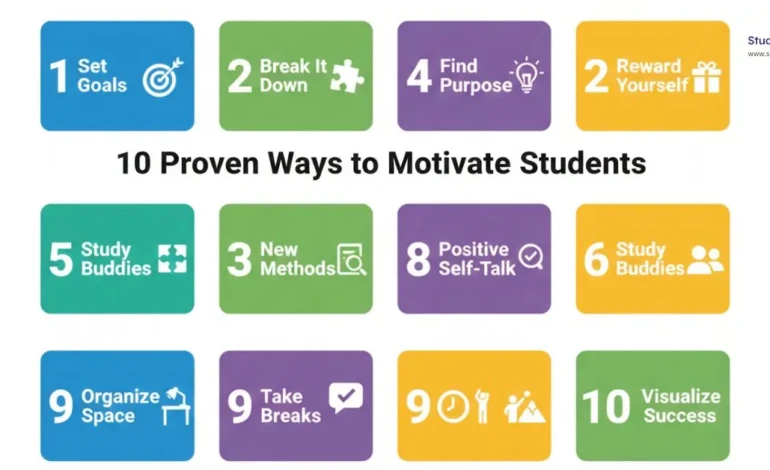
How to Motivate Students Who Lost Interest In Studies

💡 “A student who has lost interest doesn’t need pressure — they need purpose. Behind every unmotivated student is a story that needs understanding, not judgment.”
How to motivate students who lost interest in studies is one of the most searched and most heartbreaking questions parents and teachers face in 2026. You see a child who was once curious, energetic, and eager to learn — suddenly becoming disinterested, withdrawn, and reluctant to open a book.
This is not laziness. This is not a character flaw. In most cases this is a signal — a signal that something deeper needs attention. Whether it is academic pressure, personal stress, wrong learning environment, undiagnosed learning challenges, or simply a mismatch between how the child learns and how they are being taught — the solution always begins with understanding before judging.
This complete guide is written for parents and teachers who genuinely want to reignite the spark of learning in students who have lost their way — with practical, proven, and compassionate strategies that work in 2026.
✅ Important Truth: No child is born hating studies. Every child who has lost interest in learning has a reason. Your job as a parent or teacher is not to force them back — it is to find that reason and address it with patience, love, and the right strategies.
📑 Table of Contents
- Why Students Lose Interest in Studies
- Warning Signs Parents and Teachers Must Not Ignore
- How to Motivate Students Who Have Lost Interest in Studies — 10 Proven Strategies
- Role of Parents — What to Do at Home
- Role of Teachers — What to Do in the Classroom
- How Technology and AI Can Re-Engage Students
- The Power of Finding One Inspiring Teacher or Mentor
- When to Seek Professional Help
- Real Life Turnaround Stories
- Frequently Asked Questions (FAQs)
🔍 1. Why Students Lose Interest in Studies — The Real Reasons
Before trying to motivate a student it is essential to understand why they lost interest in the first place. Forcing motivation without addressing the root cause is like giving pain killers without treating the disease.
😰 Academic Reasons
- Too much syllabus pressure
- Fear of exams and failure
- Difficulty understanding concepts
- Poor foundational knowledge
- Boring or ineffective teaching methods
- Unrealistic expectations from parents
😔 Personal and Emotional Reasons
- Family problems or conflicts at home
- Friendship issues or bullying at school
- Low self-confidence and self-esteem
- Anxiety or depression
- Feeling unseen or unheard by adults
- Heartbreak or personal loss
📱 Digital Distraction Reasons
- Social media addiction
- Gaming addiction
- YouTube and OTT binge watching
- Constant phone notifications
- Comparing social media highlights
- Overnight screen usage affecting sleep
🎯 Motivational Reasons
- No clear goal or vision for the future
- Cannot see relevance of studies to real life
- Feeling studies are meaningless
- No role model or inspiration
- Previous failures dampening confidence
- Wrong stream or subject choice
💡 Key Insight: Most students who lose interest in studies are NOT lazy. They are either overwhelmed, disconnected, struggling silently, or simply not studying in a way that works for their brain. The moment you identify the real reason — the solution becomes much clearer.
⚠️ 2. Warning Signs Parents and Teachers Must Not Ignore
Sometimes loss of interest in studies is a symptom of something more serious. Here are warning signs that need immediate attention:
🚨 Warning Signs — Act Immediately
- 🚨 Sudden and complete withdrawal from all activities — not just studies
- 🚨 Refusing to go to school for days continuously
- 🚨 Sleeping excessively or showing signs of extreme fatigue
- 🚨 Statements like “what is the point of anything” or “nobody cares about me”
- 🚨 Loss of appetite or significant weight change
- 🚨 Self-harm or talking about not wanting to exist
- 🚨 Complete isolation from friends and family
- 🚨 Sudden dramatic change in behavior or personality
⚠️ If you notice any of these warning signs — do not wait. Do not focus on studies at all. First address the emotional and mental health of your child. Speak to a school counsellor, psychologist, or doctor immediately. Studies can always be caught up — but mental health must be prioritized first.
🚀 3. How to Motivate Students Who Have Lost Interest in Studies — 10 Proven Strategies
Here are 10 research-backed and practically proven strategies that work for real students in real Indian families and classrooms:
💡 Strategy 1 — Start with a Genuine Conversation — Not a Lecture
The most powerful first step is simply to sit with your child without an agenda and ask — “How are you feeling? Is something bothering you? I am here to listen — not judge.” Most children who have lost interest in studies are waiting for someone to ask this question sincerely.
How to do it: Choose a relaxed time — not during or after a fight about studies. Go for a walk together, sit on the terrace, or share a meal. Create a safe and judgment-free space. Listen more than you speak. Do not give solutions until you fully understand the problem.
💡 Strategy 2 — Connect Studies to Their Dreams and Goals
Most students who hate studying simply cannot see the connection between what they are studying and what they want in life. When you help them see that connection — motivation follows naturally.
How to do it: Ask them — “What kind of life do you want at 25? What career excites you?” Then show them specifically how each subject they study connects to that dream. A child who wants to be a game designer will suddenly become interested in Mathematics and Programming when they see the connection.
💡 Strategy 3 — Break the Mountain into Small Steps
One of the biggest reasons students give up is because the syllabus feels like an impossible mountain. The solution is to break it into tiny, manageable steps that feel achievable every single day.
How to do it: Instead of saying “finish the whole chapter today” say “read just 2 pages today.” Instead of “study for 4 hours” say “study for just 25 minutes then take a break.” Use the Pomodoro technique — 25 minutes study, 5 minutes break. Small wins build momentum and momentum builds confidence.
💡 Strategy 4 — Celebrate Every Small Win
When students only hear about what they got wrong — they stop trying. When they are celebrated for every small improvement — they want to improve more. The brain is wired to repeat behaviors that bring positive feelings.
How to do it: Acknowledge every small improvement verbally and enthusiastically. “You remembered all the formulas today — that is amazing!” Give small rewards for completing study goals — favorite food, extra screen time, a movie night. Make progress feel good and they will pursue more progress.
💡 Strategy 5 — Change the Study Environment
Sometimes students are not demotivated — they are simply bored of the same study environment. A change of scenery can dramatically change their energy and focus levels.
How to do it: Let them study in different places — the garden, a library, a coffee shop, the terrace. Rearrange their study room. Add good lighting and plants. Play soft instrumental background music. Remove all distractions from the study space. Sometimes the simplest environmental changes create the biggest motivational shifts.
💡 Strategy 6 — Let Them Choose How They Study
Every child has a different learning style. Some learn by reading. Some learn by listening. Some learn by doing. Some learn by watching videos. Forcing every child to sit and read a textbook for hours is like forcing a left-handed child to write with the right hand.
How to do it: Introduce YouTube educational channels like Vedantu, BYJU’s, Khan Academy, and Unacademy. Let them use flashcards, mind maps, or voice notes to study. Allow them to study with friends if peer learning works for them. The goal is learning — not following a rigid method.
💡 Strategy 7 — Introduce a Study Buddy or Peer Group
Teenagers are social beings. They are motivated by their peers far more than by adults. A good study group can transform a demotivated student into an engaged learner almost overnight.
How to do it: Help your child identify 2 to 3 friends who are focused and positive about studies. Encourage regular study sessions — online or in person. Join online study communities on Discord or WhatsApp. Healthy peer influence is one of the most powerful motivators for teenagers.
💡 Strategy 8 — Introduce Inspiring Stories and Role Models
Sometimes all a demotivated student needs is to hear the story of someone who struggled just like them — and still made it big. Inspiring stories activate dormant motivation and change perspectives powerfully.
How to do it: Share stories of successful people who struggled in school — APJ Abdul Kalam, Albert Einstein, Dhirubhai Ambani, Sundar Pichai. Watch motivational documentaries and TEDx talks together. Read biographies of people your child admires. Connect them with successful professionals in their area of interest for a real conversation.
💡 Strategy 9 — Address Screen Time and Digital Addiction Honestly
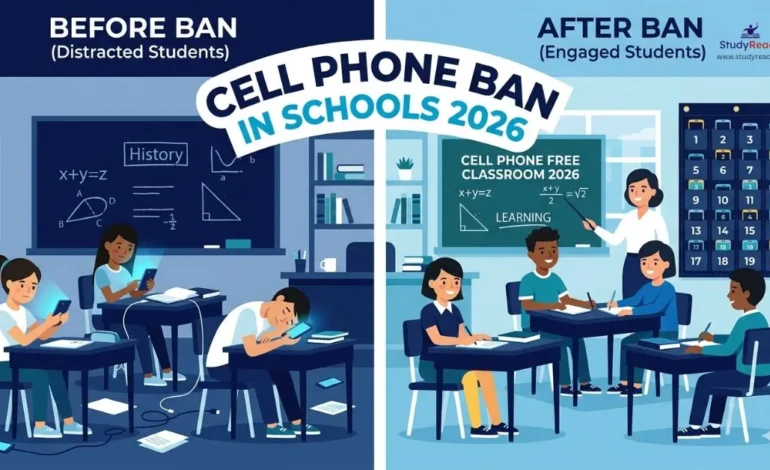
In 2026 digital distraction is the single biggest enemy of student motivation. Social media, gaming, and YouTube are designed by billion-dollar companies specifically to be addictive. Your child is not weak — they are fighting a scientifically engineered addiction.
How to do it: Do not take away the phone suddenly — that creates rebellion. Instead create phone-free study hours by mutual agreement. Use app timers and screen time controls. Lead by example — put your own phone away during family and study time. Replace screen time gradually with activities that give real satisfaction — sports, hobbies, real social connection.
💡 Strategy 10 — Focus on Growth Mindset Not Fixed Mindset
Research by psychologist Carol Dweck proves that students with a growth mindset — who believe intelligence can be developed — consistently outperform students with a fixed mindset — who believe you are either smart or you are not.
How to do it: Replace “you are not smart enough” with “you have not learned this yet.” Replace “you failed” with “you found a way that does not work — now find one that does.” Praise effort not just results. Teach them that every expert was once a beginner. Every failure is a lesson in disguise.
🏠 4. Role of Parents — What to Do at Home
✅ DO These Things at Home
- ✅ Create a fixed but flexible daily routine with study breaks built in
- ✅ Ensure adequate sleep — minimum 8 hours for teenagers
- ✅ Provide nutritious food — brain performance is directly linked to nutrition
- ✅ Keep home environment peaceful — constant family conflict affects children deeply
- ✅ Show genuine interest in what they are learning — ask them to teach you
- ✅ Read yourself — children of reading parents become readers and learners
- ✅ Limit your own screen time — you cannot ask children what you do not practice
❌ AVOID These Things at Home
- ❌ Shouting, threatening, or physically punishing for poor performance
- ❌ Comparing with siblings, cousins, or neighbours
- ❌ Discussing your child’s failures in front of relatives or guests
- ❌ Checking their diary or phone without permission — destroys trust
- ❌ Making them study late into the night sacrificing sleep
- ❌ Ignoring their emotional needs while focusing only on marks
- ❌ Using studies as a weapon — “if you do not study you will be a failure”
🏫 5. Role of Teachers — What to Do in the Classroom
✅ Classroom Strategies for Teachers
- ✅ Notice the quiet ones — students who suddenly go silent often need the most help
- ✅ Use real-world examples — connect every concept to real life situations students relate to
- ✅ Give choices in assignments — let students choose how they demonstrate learning
- ✅ Acknowledge effort publicly — even small improvements deserve recognition in class
- ✅ Have one-on-one conversations — check in privately with struggling students
- ✅ Make learning interactive — debates, group activities, quizzes, storytelling
- ✅ Be patient with slow learners — every student has a different learning pace
💙 A Message for Teachers
You may never know which student you saved with one kind word, one encouraging smile, or one moment of genuine attention. Research consistently shows that one caring teacher can completely change the trajectory of a child’s life. Your role is not just to teach subjects — it is to believe in students when they have stopped believing in themselves. That is the greatest power a teacher has. 🙏
💻 6. How Technology and AI Can Re-Engage Students in 2026
In 2026 technology is both the problem and the solution. The same devices that distract students can — when used correctly — become their most powerful learning tools.
🎬 YouTube Learning Channels
- Khan Academy India
- Vedantu — Live Classes
- Physics Wallah
- Unacademy
- BYJU’s Classes
🤖 AI Study Tools
- ChatGPT — Instant doubt solving
- Google Gemini — Research help
- Quizlet — Flashcard revision
- Photomath — Math solutions
- Grammarly — Writing help
🎮 Gamified Learning Apps
- Duolingo — Language learning
- Kahoot — Quiz games
- Brilliant.org — Math and Science
- Lumosity — Brain training
- Socratic by Google
📱 Productivity Apps
- Forest App — Focus timer
- Notion — Study planner
- Google Calendar — Schedule
- Todoist — Task management
- Focus@Will — Study music
💡 Pro Tip for Parents: Instead of fighting against technology — redirect it. Ask your child to show you how they use ChatGPT for studies. Watch a Physics Wallah video together. Download the Forest App and use it together for family focus time. When technology becomes a shared positive experience — it stops being a source of conflict.
⭐ 7. The Power of Finding One Inspiring Teacher or Mentor
Research from Harvard University shows that having just one caring adult mentor or teacher dramatically increases a struggling student’s chances of academic recovery and long-term success. This person does not have to be a school teacher — it can be a relative, a neighbor, an online educator, or a community leader.
How to Find This Mentor for Your Child
- 🔍 Identify a teacher your child has ever spoken positively about
- 🔍 Look for a successful professional in a field your child is interested in
- 🔍 Connect with inspiring educators on YouTube — many respond to genuine messages
- 🔍 Join community learning groups and workshops
- 🔍 Enroll in online courses where the instructor is highly engaging
- 🔍 Find older students who have overcome similar struggles to share their story
✅ True Fact: Many of India’s most successful people — IIT toppers, IAS officers, entrepreneurs — point to ONE teacher or mentor who believed in them during their lowest point. That one person changed everything. Be that person for your child — or help them find that person.
🧑⚕️ 8. When to Seek Professional Help
Sometimes the strategies above are not enough and professional support is needed. Here is when to seek help and where to find it:
🚨 Seek Professional Help When:
- The student shows signs of clinical depression or anxiety for more than 2 weeks
- Despite trying everything the situation is getting worse not better
- The student has been diagnosed or suspected of having ADHD or learning disabilities
- There is complete school refusal lasting more than a week
- The student expresses feelings of hopelessness or worthlessness repeatedly
- Family conflict is severe and ongoing — the child needs a neutral safe space
🌐 Professional Help Resources in India 2026
- 🌐 iCall — TISS — Free counselling for students
icallhelpline.org - 🌐 Vandrevala Foundation Helpline — 1860-2662-345 — 24/7 free mental health support
- 🌐 YourDOST — Online counselling platform for students
yourdost.com - 🌐 Mindler — Career and academic counselling for school students
mindler.com - 🌐 School Counsellor — Always the first point of contact — available free at most schools
📖 9. Real Life Turnaround Stories
📖 Story 1 — Rohan from Jaipur
Rohan was a Class 9 student who completely stopped studying after scoring 40% in his half yearly exams. His parents shouted, compared him with his elder brother, and threatened to send him to boarding school. The more they pressured — the more he withdrew.
His mother finally stopped fighting and simply asked — “Beta kya ho raha hai?” For the first time Rohan broke down and admitted he had been bullied at school for months and was too ashamed to tell anyone.
Once the bullying issue was addressed with the school — Rohan slowly came back. His mother started sitting with him for just 30 minutes of quiet study time daily — no pressure just presence. By Class 10 he scored 78%.
Lesson: ✅ Sometimes the problem has nothing to do with studies. Listening first unlocks everything.
📖 Story 2 — Sneha from Pune
Sneha was a Class 11 Commerce student who loved drawing but was forced into Commerce by her father. She stopped attending school regularly and her grades dropped to failing. Her teacher noticed Sneha doodling beautiful illustrations in the margins of her notebooks.
The teacher called her privately and said — “These drawings are incredible Sneha. Did you know Graphic Design is a career where you could earn ₹30 lakhs per year?” Sneha had never heard this before.
The teacher helped connect Sneha with an online UX Design course. Within weeks Sneha was studying again — not Commerce textbooks — but design principles, color theory, and digital tools. She later enrolled in a Design college and is now a successful UX Designer.
Lesson: ✅ One teacher who saw her real potential changed everything. Connecting interest to a real career ignited her motivation instantly.
📖 Story 3 — Aryan from Delhi
Aryan was addicted to gaming and had completely stopped studying by Class 10. His parents tried everything — confiscating the phone, cutting internet, and even sending him for counselling. Nothing worked because they were fighting the symptom not the cause.
A counsellor finally helped them understand that Aryan was not just addicted to games — he was escaping from extreme anxiety about his parents’ ongoing marital conflict at home. When his parents agreed to stop fighting in front of him and started family therapy — Aryan’s gaming addiction reduced dramatically on its own. He studied enough to pass Class 10 and went on to build a career in game development — using his gaming knowledge productively.
Lesson: ✅ Home environment affects children more than anything else. Peace at home creates space for learning.
❓ 10. Frequently Asked Questions (FAQs)
My child says studies are boring — what should I do?
Do not dismiss this statement — it is important feedback. Ask them which part feels boring and why. Often boring studies mean the teaching method does not match the child’s learning style. Introduce YouTube educational videos, interactive apps, and real-world examples. Let them study topics that connect to their interests first — build momentum — then expand.
How many hours should a Class 10 or 12 student study daily?
Quality matters far more than quantity. A focused 4 to 5 hours of distraction-free study is far more effective than 10 hours of half-hearted studying with frequent phone breaks. For board exam students 5 to 6 hours of quality daily study is ideal. Ensure adequate breaks — a 10 minute break every hour maintains focus and retention.
My child is in Class 12 and completely stopped studying 2 months before boards — what do I do?
Do not panic — this is more common than you think. First reduce pressure immediately — panic from parents worsens the situation. Speak with a counsellor if needed. Create a realistic 60-day revision plan focusing only on high-weightage chapters. Use smart study tools like previous year papers and NCERT summaries. Even with 2 months of focused preparation students can score well enough to move forward with their plans.
Is it normal for teenagers to lose interest in studies?
Yes — temporary dips in motivation are completely normal during adolescence. Hormonal changes, social pressures, identity formation, and the overwhelming nature of board exam preparation all contribute to motivation drops. The key is to distinguish between a temporary dip — which resolves with support — and a deeper issue that needs professional attention. Most cases are temporary and resolve with the right approach.
My child only wants to play games all day — how do I handle this?
Gaming addiction is real and serious but it can be managed. Do not confiscate devices suddenly — this creates extreme rebellion. Instead set clear boundaries by mutual agreement — for example gaming only after 6 PM and only for 90 minutes. Replace gaming time gradually with outdoor activities, sports, or creative hobbies that give real-world social interaction and achievement. Also explore if your child is escaping something through gaming — loneliness, stress, or unhappiness at school or home.
Should I hire a tutor for my demotivated child?
A tutor can help — but only if the child’s demotivation is academic in nature. If the child is struggling with concepts and feeling hopeless academically — a good patient tutor can rebuild confidence dramatically. However if the demotivation is emotional, social, or related to wrong career path — a tutor alone will not solve the problem. Address the root cause first — then academic support will be much more effective.
🎯 Final Words — Every Student Can Come Back
Dear Parents and Teachers,
There is no such thing as a student who cannot be motivated. There are only students who have not yet found the right reason, the right method, the right environment, or the right person who believes in them.
Your patience, your consistency, and your unconditional belief in your child or student is the most powerful motivational tool that exists. No app, no tutor, and no strategy can replace the impact of a parent who says — “I believe in you — no matter what your marks say.”
Every great story has a chapter where everything seemed lost. Help your child write the chapter where they found their way back. That chapter starts today — with you. 🚀
💙 Share This Article!
इस article को हर उस parent और teacher के साथ share करें जो किसी demotivated student की help करना चाहते हैं। आपका एक share किसी बच्चे की पूरी life बदल सकता है!
📚 Related Articles on StudyReach.in

✍️ About the Author
Shailendra Porwal, Founder of www.StudyReach.in, is an experienced education professional and content strategist. With years of work in school leadership and student guidance, he writes to simplify educational updates for students, parents, and teachers.
StudyReach.in brings you timely information about CBSE circulars, scholarship programs, and career guidance to help students excel academically. Stay updated.






1 Comment
[…] Tools for Students 2026 — How AI is Changing the Way Students Learnstudyreach.in 🎯How to Motivate Students Who Lost Interest In Studiesstudyreach.in 🚀Comfort Zone से बाहर निकलना होगा — Success कैसे […]