Drop or Repeater

Drop Year for JEE – Is It Worth It? Kota Experts Say This
📋 Table of Contents
- What Is a Drop Year for JEE?
- What Do Kota Experts Actually Say?
- Pros and Cons of Taking a Drop Year
- Drop Year JEE Success Rate – The Real Data
- Should YOU Take a Drop? Decision Guide
- Real-Life Examples – Drop Year Stories
- Top Tips for JEE Droppers to Succeed
- Alternatives to a Full Drop Year
- FAQs – Drop Year for JEE
- Final Words
Every year, after JEE results are announced, lakhs of students face one big question: “Should I take a drop year for JEE?” It’s one of the most emotionally charged decisions a student and their family will ever make. You worked hard, maybe you fell short by a few marks — and now you’re wondering if one more year can change everything.
The truth? The answer is not the same for everyone. A drop year can be a golden second chance — or it can be a wasted year that leads to the same or worse result. The key is knowing your situation.
In this article, we’ve gathered insights from top JEE coaches in Kota, success data, and real student stories to help you make the right choice. Let’s dive in.
1. What Is a Drop Year for JEE?
A drop year for JEE (also called a “gap year” or “dropper year”) means a student skips college admission for one year after Class 12 or a previous JEE attempt — and dedicates that entire year to preparing for JEE Main and JEE Advanced.
Students who take a drop year are commonly called “droppers” or “repeaters.” In cities like Kota, Rajasthan — India’s coaching capital — thousands of droppers join special one-year batch programs specifically designed for this purpose.
2. What Do Kota Experts Actually Say?
We looked at interviews, coaching institute reports, and public statements from top educators in Kota — including faculties from Allen Career Institute, Resonance, FIITJEE, and Vibrant Academy. Here’s what they consistently say:
The experts are clear: a drop year is a tool, not a guarantee. Used correctly, it transforms careers. Used carelessly, it wastes time and damages confidence.
3. Pros and Cons of Taking a Drop Year
| ✅ Advantages of Drop Year | ❌ Disadvantages of Drop Year |
|---|---|
| Full focus on JEE — no school distractions | One year gap in academic record |
| Time to strengthen weak concepts from scratch | Psychological pressure can be very high |
| Access to the best Kota coaching batches | Social isolation if not managed properly |
| Can significantly improve rank if disciplined | Risk of same or worse performance |
| Structured mock tests & feedback sessions | Family financial and emotional burden increases |
| Better time management skills developed | Comparison with classmates entering college can demotivate |
| Second chance at IIT — life-changing opportunity | No guarantee of better result |
4. Drop Year JEE Success Rate – The Real Data
Numbers don’t lie. Here’s an honest look at what the data shows about dropper performance in JEE:
| Category | Approx. % of JEE Advanced Qualifiers | Notes |
|---|---|---|
| Fresh (Class 12) candidates | ~55–60% | First-time aspirants |
| Dropper (1 year gap) candidates | ~35–40% | Significant representation |
| 2nd year drop candidates | ~5–7% | Rare & riskier |
| Droppers who improved rank | ~50–55% | Among those who attempted again |
| Droppers who got IIT in drop year | ~15–20% | Of total dropper population |
5. Should YOU Take a Drop? Decision Guide
Use this simple checklist to honestly evaluate whether a drop year makes sense for you:
✅ Take a Drop Year IF…
- Your JEE score was close to the cutoff
- Your weak topics are fixable with time
- You missed study due to illness or personal issues
- You genuinely want IIT — not just for parents
- You have a clear study plan for the year
- Your mental health is stable enough to handle pressure
- Family is financially and emotionally supportive
❌ Don’t Take a Drop IF…
- Your base in Physics/Math/Chemistry is very weak
- You studied full year but still scored very low
- Pressure or anxiety affected performance severely
- You’re unsure about engineering as a career
- You’re only dropping because of peer/parent pressure
- You have a good NIT/IIIT option available
- You don’t have a solid plan for the drop year

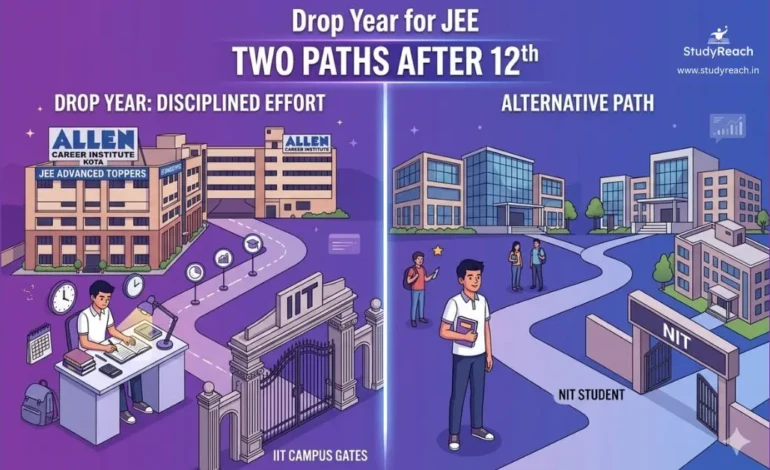
Drop Year for JEE | Source: StudyReach.in
6. Real-Life Examples – Drop Year Stories
Rahul from Jaipur scored 85 percentile in JEE Main in 2023. He decided to take a drop year, joined Allen Kota’s dropper batch, and completely restructured his study plan — giving 6 hours daily to problem-solving and 2 hours to mock test analysis. In 2024, he scored 99.2 percentile and got admission to IIT Bombay. His secret? “I treated every wrong answer as a lesson, not a failure.”
Priya from Delhi had scored 78 percentile in JEE Main after Class 12. She took a drop year but struggled with isolation and inconsistency. She scored 80 percentile the next year — barely an improvement. She later joined NIT Surathkal through CSAB counselling and is now doing well. Lesson: A drop year without a plan and mental support can backfire.
Arjun from Pune chose NOT to drop. Instead, he joined NIT Trichy in the first attempt and prepared for GATE during his B.Tech. He cracked GATE with AIR 38 and is now at IIT Bombay for M.Tech. Moral: IIT is not the only path to success. NIT + GATE can work brilliantly too.
7. Top Tips for JEE Droppers to Succeed
If you’ve decided to take the drop, here’s how to make the most of that year:
- Set a weekly schedule from Day 1 — don’t wait for “motivation.” Discipline beats motivation every time.
- Join a quality coaching institute — Kota’s dropper batches are intensive and structured. If you can’t go to Kota, use top online platforms.
- Give mock tests every week — At least 1 full mock per week from October onwards. Analyse every mistake deeply.
- Don’t ignore NCERT — Especially for Chemistry. Many JEE questions are directly NCERT-based.
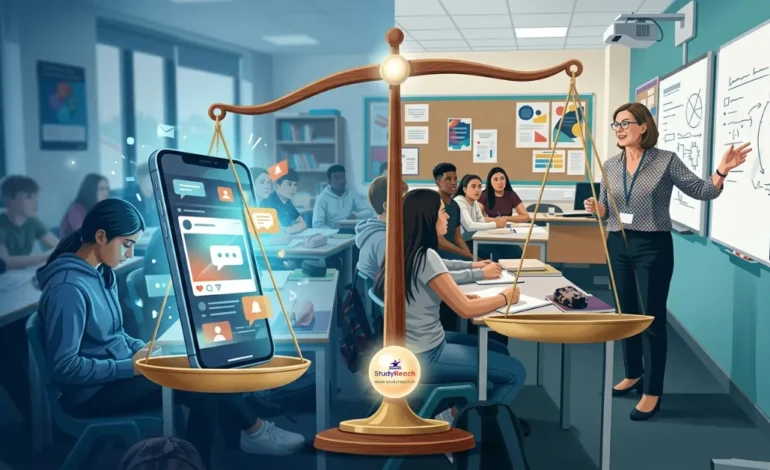
- Limit social media to 30 minutes/day — Seriously. This one change can add 2+ hours of quality study daily.
- Talk to a mentor or counsellor — Mental health is as important as academics. Don’t bottle up stress.
- Track your progress every month — Use a simple notebook or app to track topics covered and mock scores.
- Stay away from negativity — Avoid friends or relatives who constantly discourage you or compare you to others.
8. Alternatives to a Full Drop Year
Not everyone should drop. Here are smart alternatives that many students have used successfully:
🏛️ Join NIT/IIIT via JoSAA
Get a good branch at NIT and prepare for GATE or IIT JAM during B.Tech for a second shot at IITs.
Visit JoSAA📚 Prepare Online + College
Many students join a regular college and continue JEE prep online via platforms like Unacademy or PW.
Visit PW (Physics Wallah)🔬 Explore Other Exams
BITSAT, VITEEE, MET, and state CETs offer excellent engineering programs with strong placements.
Visit BITSAT9. FAQs – Drop Year for JEE
🎯 Final Words – Your Decision, Your Future
A drop year for JEE is not a shortcut or a magic solution — it’s a calculated risk that pays off for those who approach it with honesty, discipline, and a clear plan.
Before you decide, ask yourself honestly: “Am I dropping because I believe in my potential, or because I’m afraid to move on?” If it’s the first reason — go for it with full commitment. If it’s the second — explore your options, there are many wonderful paths ahead.
Remember, IIT is a destination — but it’s not the only destination. India is full of successful engineers, entrepreneurs, and leaders who didn’t go to IIT. Your hard work, skills, and attitude will define your career — not just the name of your college.
We at StudyReach.in are always here to guide you. 💜