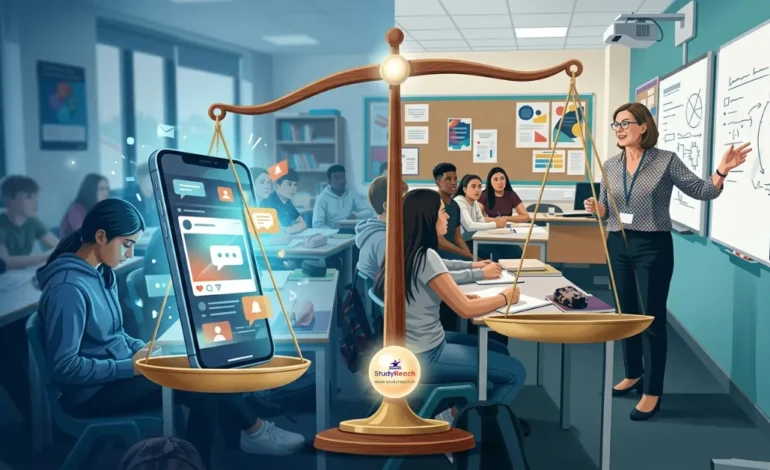
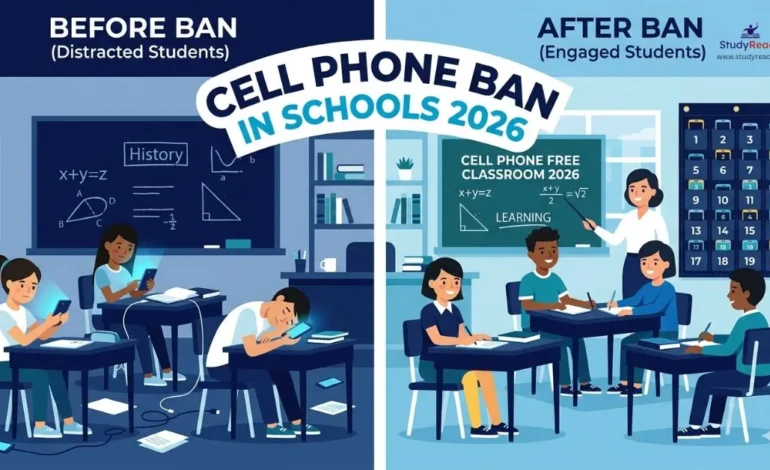
Cell Phone Ban in Schools ! What Do You Think

Should Phones Be Banned? 📵
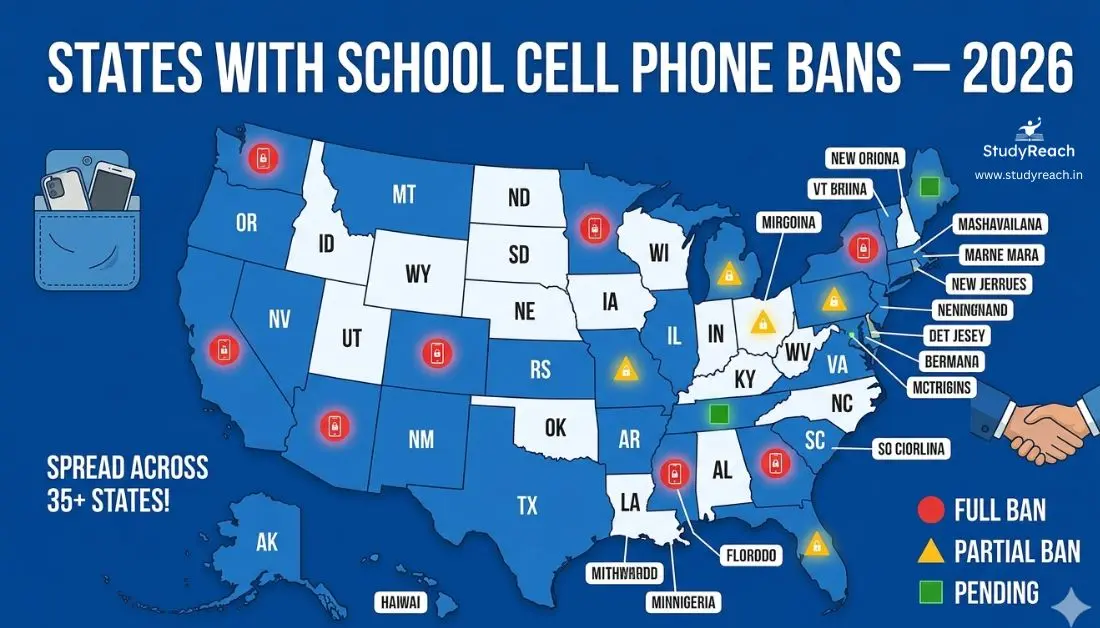
Over 35 U.S. states have passed laws restricting cell phones in schools. What does science say? What do students, parents & teachers think? Here’s the complete picture.
📋 Table of Contents
📵 What Is the Cell Phone Ban in Schools?
The cell phone ban in schools is one of the hottest education debates of 2026. It refers to policies — at school, district, or state level — that restrict or fully prohibit students from using smartphones and personal devices during the school day. While the debate is loudest in the United States, countries like France, Brazil, and the UK have already acted, and the conversation is reaching India’s classrooms too.
The trigger? Mounting evidence that smartphones are linked to falling academic performance, rising anxiety, and social disconnection among students aged 10–18. As one teacher memorably put it: “Teaching a class where students are on their phones is like trying to teach at Disney World over a loudspeaker.”
On average, adolescents in the USA use their smartphones for 66 minutes during school hours — time taken directly away from learning. (Source: RAND/JAMA)
🗺️ Current Status in the USA (2026): Which States Have Banned Phones?
The movement has been swift and sweeping. As of early 2026, 35 states + Washington D.C. have enacted laws or policies restricting student cell phone use in K–12 schools. Of these, 26 states have full “bell-to-bell” bans — meaning phones are off-limits for the entire school day, including lunch and free periods.
77% of U.S. schools say they prohibit phones for non-academic use. And 93% of adults now prefer either a bell-to-bell ban or no phone use during class for their children. (Source: NCES, Brookings 2026)
🏫 Real-Life Examples from Schools
17-year-old Rebekah Munro says the statewide phone ban gave her back reading time — she now reads sci-fi novels instead of scrolling Snapchat. Her grades improved noticeably.
Since the full bell-to-bell ban took effect in February 2025 across LA’s 600,000-student district, teachers report significantly fewer disruptions and improved student focus.
After K-8 ban proved successful, Georgia is now expanding the bell-to-bell restriction to high schools. Rep. Scott Hilton says he was “blown away at the positive reaction from all constituencies.”
France banned phones in primary and middle schools as early as 2018. Brazil followed. Both countries report improved social interaction during breaks and fewer bullying incidents.
⚖️ Pros & Cons of Cell Phone Bans in Schools
The debate is nuanced. Let’s look at both sides with the latest research findings:
Studies consistently show phone bans improve academic achievement, but evidence on mental health benefits remains mixed. What’s clear: schools report fewer behavioral problems and reduced bullying after implementation. (Paragon Institute, 2026)
cell-phone-ban-in-schools-2026 | Source: StudyReach.in
🗣️ What Students, Parents & Teachers Say
🇮🇳 The India Connection — Lessons for Our Schools
India is not immune to this challenge. With over 750 million smartphone users and increasing device access among students, Indian schools — especially CBSE institutions — are beginning to grapple with the same questions that U.S. schools faced five years ago.
- Many CBSE and state board schools already have informal phone bans — but enforcement is inconsistent.
- The NEP 2020 encourages digital literacy, which makes a complete ban controversial in the Indian context.
- Indian parents increasingly worry about screen addiction, especially post-COVID when online learning normalized device use.
- Class 10 and 12 students under exam pressure often use phones for distraction, not study tools.
The USA’s experience offers India a valuable playbook: start with classroom bans, not blanket bans, invest in enforcement infrastructure (phone pouches, lockers), and involve students in designing the policy for better buy-in.
💡 Practical Tips for Parents & Teachers
👨👩👧 For Parents
- Set a “no phone at meals” rule at home
- Create a charging station outside the bedroom
- Use parental control apps for screen time limits
- Teach kids why limits help, not just what the rules are
- Discuss school phone policy as a family
👩🏫 For Teachers
- Use phone-free starters — begin class with offline activities
- Design engaging lessons that don’t need phones
- When technology is needed, use school-provided devices
- Be consistent in enforcement — model the behavior
- Acknowledge students who comply positively
Simply passing a phone ban without enforcement infrastructure leads to failure. Research shows most students continue using phones despite restrictions unless schools invest in dedicated storage systems like Yondr pouches or numbered slots. Policy without enforcement = no change.
🔗 Explore More — Trusted Resources
📖 Related Articles on StudyReach.in
❓ Frequently Asked Questions (FAQ)
Q1. Why are so many U.S. states banning cell phones in schools? ▼
Because research confirms smartphones are a major distraction — students spend an average of 66 minutes on phones daily during school. States are acting to improve academic performance, reduce cyberbullying, and address the student mental health crisis linked to excessive screen time and social media use.
Q2. What is the difference between a bell-to-bell ban and a classroom-only ban? ▼
A bell-to-bell ban means phones are prohibited for the entire school day — including lunch, breaks, and passing periods. A classroom-only ban restricts phones only during instructional time; students can use them during free periods. Bell-to-bell bans are stricter and more effective but also face more resistance from students.
Q3. Do students support phone bans in schools? ▼
It’s mixed. About 41% of teens support classroom bans, but only 20% support all-day bans. However, 76% of teens say they want some form of restriction — suggesting students understand phones are a distraction, even if they dislike strict rules. Support has been rising year on year since 2024.
Q4. What about emergencies — how do students contact parents if phones are banned? ▼
This is the most common concern from parents. Schools with phone bans typically make exceptions for genuine medical needs and maintain office phones for emergencies. Cybersecurity experts also note that during active shooter events, phones can endanger students by revealing locations. Schools communicate emergency protocols clearly to families.
Q5. Should Indian schools also ban cell phones? ▼
Many Indian schools already have informal bans that aren’t enforced. Given the same distraction and mental health concerns seen globally, a structured classroom-ban with clear policy is advisable. However, India’s NEP 2020 also emphasizes digital literacy, so a nuanced approach — restricting personal devices while providing school-managed technology access — is the recommended middle path.
Q6. Do phone bans actually improve grades? ▼
Yes — research shows a consistent positive link. Studies referenced in the JAMA literature review confirm academic performance improves when phone access is restricted. Schools that enforce bans well report better test scores, higher assignment completion rates, and improved teacher-student interaction quality.
📝 Final Words — From the StudyReach Desk
The cell phone ban in schools debate is not simply about banning a device — it’s about reclaiming the classroom as a focused, human-centered space for learning, curiosity, and growth.
The data from the USA in 2026 tells a clear story: over 35 states have acted, parents overwhelmingly support restrictions, and even students are slowly coming around when they see the benefits firsthand. The research is consistent — less phone time in class means better grades and better mental health.
For Indian parents, teachers, and schools — this is a moment to get ahead of the curve. A thoughtful, well-enforced classroom phone policy today could transform the quality of learning for the next generation of students. 🙏

Shailendra Porwal is an educator, career counsellor, and the founder of StudyReach.in — a trusted platform for students, parents, and teachers across India. With years of experience in academic guidance, CBSE curriculum, and study-abroad consulting, Shailendra is passionate about making quality education content accessible to every learner. His writing blends research, real-world experience, and genuine care for student success.
🌐 Visit StudyReach.in